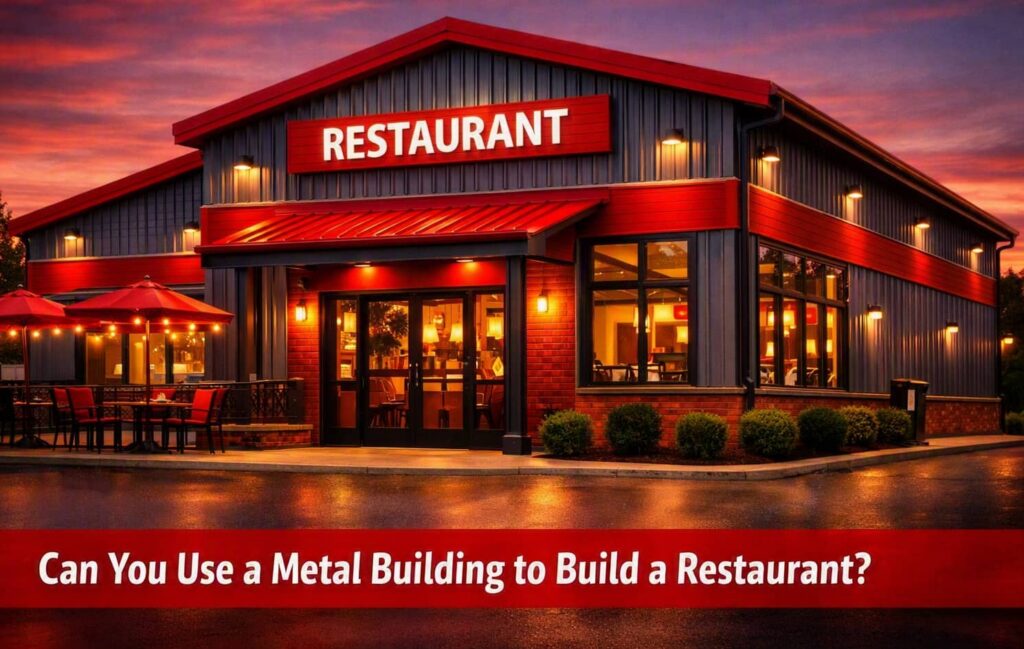
Yes. You can absolutely build a restaurant using a metal building. In fact, pre‑engineered steel buildings are becoming one of the smartest ways to launch new restaurants, expand existing concepts, or add drive‑thru and takeout space.
For owners, developers, and franchise operators, a metal building offers a combination of speed, flexibility, and long‑term durability that traditional construction struggles to match. The key is making sure the building is engineered as a commercial‑grade structure and planned around the unique needs of a restaurant.
Why metal buildings are ideal for restaurants
1. Engineered for commercial codes
A restaurant is a high‑occupancy commercial building with strict safety requirements. Modern red‑iron steel buildings can be engineered to meet or exceed:
- IBC‑based commercial building codes
- Local wind, snow, and seismic requirements
- Fire and life‑safety standards for occupied spaces
When you work with a metal building supplier that understands commercial projects, your restaurant shell is designed from day one to handle the loads, traffic, and mechanical systems a busy kitchen and dining room demand.
2. Clear‑span layouts for flexible floor plans
Restaurants evolve. Menus change, seating layouts get reworked, and concepts expand. Clear‑span steel framing gives you:
- Column‑free dining areas for open seating or flexible table arrangements
- Room for large commercial kitchens with equipment islands and prep zones
- Space for bars, brew systems, or display kitchens
- Future expansion options without major structural changes
Because the structure carries loads through the steel frame, interior walls are mostly non‑structural. That makes it much easier to reconfigure the space as your restaurant grows.
3. Exterior design and branding options
A metal building doesn’t have to look like a warehouse. With the right design choices, your restaurant can match or outperform traditional construction in curb appeal:
- Brick, stone, or stucco façades
- Glass storefronts and curtain walls
- Parapet walls and branded signage bands
- Covered entries, patios, and outdoor dining areas
The steel shell provides the structure; your exterior finishes and architectural details deliver the look and feel of your brand.
4. Faster construction timelines
Time to open matters. Every month you shave off construction is a month you can be serving customers instead of paying carrying costs.
Pre‑engineered metal buildings help by:
- Reducing design and engineering time with proven framing systems
- Arriving on site as a complete steel package
- Erecting faster than many traditional methods
For restaurants adding a second location, building in a new market, or expanding with a drive‑thru or takeout wing, speed can be the difference between capturing demand and missing it.
5. Long‑term durability and lower maintenance
Restaurants are hard on buildings; grease, moisture, temperature swings, and constant traffic all take a toll. Steel framing and panels offer:
- Resistance to rot, termites, and pests
- Strong performance in high‑wind and heavy‑snow regions
- Non‑combustible framing that pairs well with fire‑suppression systems
- Low exterior maintenance compared to many traditional materials
Over the life of the restaurant, those durability advantages can translate into fewer repairs and more predictable operating costs.
Key design considerations for a restaurant in a metal building
Using a metal building for a restaurant isn’t just about the shell. You still need to plan carefully around the operational and code requirements of food service.
1. Kitchen and mechanical systems
Commercial kitchens drive many of the building decisions. When planning a metal building restaurant, you’ll need to account for:
- Hood systems and make‑up air
- Grease ducts and fire suppression
- Walk‑in coolers and freezers
- Heavy equipment loads and utility runs
Your building engineer and MEP (mechanical, electrical, plumbing) team should coordinate early so penetrations, roof loads, and utility chases are integrated into the steel design, not added as an afterthought.
2. Zoning and site planning
Even if the structure is steel, the restaurant still has to meet local zoning and site requirements:
- Approved use for restaurant or food service
- Setbacks from property lines and rights‑of‑way
- Parking minimums and drive‑thru stacking lanes
- Trash enclosure and delivery access locations
A metal building can fit these requirements just as well as any other construction type; the difference is in how the site plan and building layout are coordinated.
3. Accessibility and customer flow
Customer experience starts in the parking lot and continues through the front door. Your metal building design should support:
- ADA‑compliant entries, ramps, and restrooms
- Logical flow from entry to host stand, bar, and dining areas
- Clear paths for servers and bussers
- Efficient routes between kitchen, expo, and seating
Because interior walls are flexible, you can refine this flow over time without major structural changes.
4. Insulation and comfort
Restaurants need to stay comfortable even with doors opening constantly and kitchens running hot. Metal buildings can be insulated to perform extremely well:
- High‑R‑value roof and wall systems
- Insulated panels or liner systems
- Properly sized HVAC with zoning for kitchen vs. dining
Done right, a steel restaurant building can be just as comfortable (and often more efficient) than traditional construction.
Examples of restaurant concepts that fit well in metal buildings
A metal building can work for a wide range of restaurant types, including:
- Fast‑casual and quick‑service restaurants with drive‑thru lanes
- BBQ, smokehouse, and steakhouse concepts needing large kitchens and open dining
- Breweries and taprooms with tall ceilings and production areas
- Family diners and cafés in suburban or rural locations
- Food halls or multi‑tenant spaces with shared infrastructure
In many of these cases, the ability to combine open interior space, tall clear‑spans, and branded exteriors makes steel a natural fit.
Final thoughts: is a metal building right for your restaurant?
If you’re asking, “Can I use a metal building to build a restaurant?” the practical answer is yes, and in many cases, it’s the best answer.
A properly engineered steel building can:
- Meet commercial codes and safety requirements
- Support flexible, future‑proof layouts
- Deliver strong curb appeal with the right exterior design
- Reduce construction time and long‑term maintenance
For owners and developers who want a restaurant that’s efficient, durable, and ready to grow, a metal building is a strategic advantage.
Ready to Build Your Restaurant in a Metal Building?
If you’re exploring a metal building for a restaurant, taproom, café, or drive‑thru concept, ROI Metal Buildings can help you move from idea to engineered reality. Our team designs commercial‑grade steel buildings that meet restaurant codes, support efficient kitchen layouts, and deliver the curb appeal your brand needs.
Whether you’re planning a new build, expanding an existing location, or adding a drive‑thru, we’ll help you choose the right size, layout, and engineering package for long‑term success.
Talk to a Building Specialist
Start your restaurant project today. Request a custom quote or speak with our commercial building team.