1:12 Roof Pitch
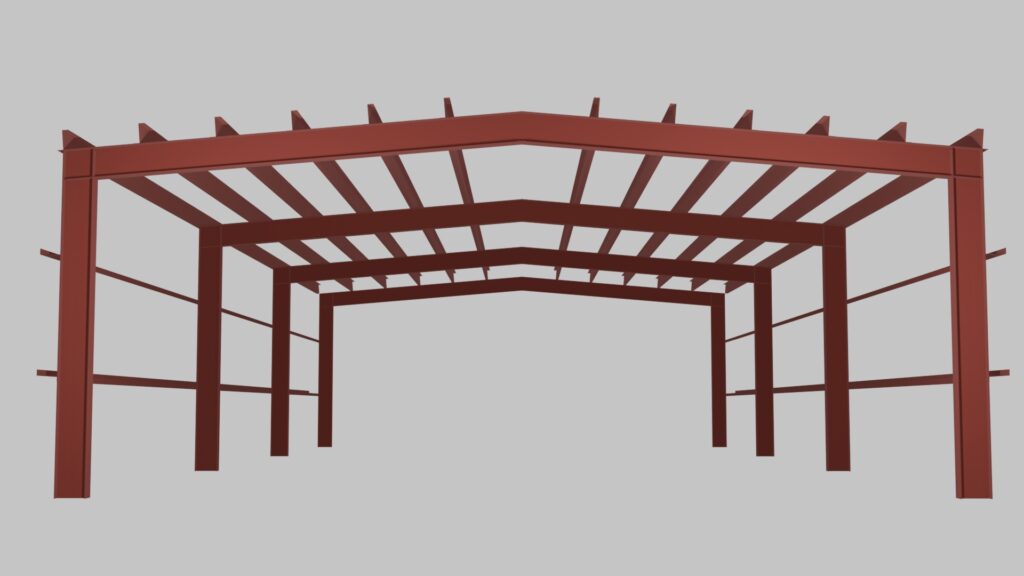
A 1:12 roof pitch means the roof rises just 1 inch for every 12 inches of horizontal run, creating an extremely shallow slope. This low‑profile design is cost‑effective because it uses fewer materials and is quicker to install. It also makes maintenance easier since the roof is simple to access. The minimal slope improves energy efficiency as well, reducing the amount of air space inside the building and making heating and cooling more efficient.
1:12 Roof Pitch Metal Building Design Examples
Other Common Roof Pitches
Key Characteristics
- Steep slope – The roof rises 6 inches per foot of run, creating a tall, prominent profile often used for barndominiums, cabins, and premium shops.
- 26.6‑degree angle – This angle dramatically improves water and snow shedding, reducing long‑term load stress and ice‑dam risk.
- Excellent drainage – Water clears quickly, minimizing standing moisture and extending panel and fastener life.
- Superior snow shedding – Snow slides off efficiently, which is ideal for Colorado’s winter conditions; though snow guards may be needed near walkways.
- Strong wind performance – Steeper slopes can catch more wind, but PEMB engineering compensates with bracing and panel fastening patterns.
- Broad panel compatibility – Works with standing seam, R‑panel, and concealed‑fastener systems; installation technique matters more at this pitch.
- More attic or loft volume – The steeper rise creates significantly more usable interior space for mezzanines, HVAC routing, or vaulted ceilings.
- More demanding installation – Crews require additional fall protection and staging, which can increase labor cost and install time.
Key Characteristics
- Moderate slope – Rises 5 inches per foot of run, giving you a balanced profile that avoids the “flat” look of low‑slope roofs while staying far easier to build than steep residential pitches.
- 22.6‑degree angle – This angle improves water and snow shedding, which matters in Colorado’s freeze‑thaw cycles and reduces long‑term roof load stress.
- Enhanced drainage – Faster runoff reduces standing water, minimizes leaks, and extends panel and fastener life.
- broader panel compatibility – Works with standing seam, R‑panel, and most concealed‑fastener systems without special engineering.
- Easier installation – Steeper than low‑slope but still safe and manageable for crews; no special fall‑arrest systems required beyond standard OSHA compliance.
- Strong wind performance – The angle helps deflect uplift forces better than very shallow roofs, improving overall building resilience.
Key Characteristics
- Moderate incline – The roof rises 4 inches per foot of run, giving a clean, proportional profile that works well for shops, barns, barndominiums, and commercial PEMBs.
- 18.4‑degree angle – This angle provides reliable water and snow shedding without the visual height of steeper residential-style roofs.
- Strong drainage – Steeper than 1:12–3:12, so water clears faster, reducing the risk of ponding and extending panel and fastener life.
- Good snow performance – The slope encourages shedding without creating dangerous slide‑off speeds, which is ideal for Colorado’s winter conditions.
- Balanced wind resistance – The angle helps reduce uplift forces while maintaining structural efficiency in the frame design.
- Broad panel compatibility – Works with standing seam, R‑panel, and most concealed‑fastener systems without special engineering.
Key Characteristics
- Low‑moderate slope – The roof rises 3 inches per foot of run, giving a streamlined, modern profile that keeps overall building height down.
- 14‑degree angle – This angle is shallow enough to reduce steel usage but still steep enough to shed water reliably in most climates.
- Adequate drainage – Not as fast‑shedding as 4:12 or 5:12, but still effective for rain and moderate snow when paired with proper panel selection.
- Snow‑load friendly – Snow tends to sit longer on a 3:12 roof, which engineers account for with purlin spacing, panel gauge, and load calculations.
- Excellent wind performance – The lower profile reduces uplift forces, making it a strong choice in open or high‑wind regions.
- Broad panel compatibility – Works well with standing seam and many R‑panel systems, though standing seam is preferred for long‑term leak resistance.
Key Characteristics
- Very low slope – The roof rises just 2 inches per foot of run, creating a sleek, almost flat profile ideal for modern shops, warehouses, and commercial PEMBs.
- 9.5‑degree angle – This shallow angle minimizes overall building height and reduces the amount of steel required in rafters and columns.
- Controlled drainage – Water sheds more slowly than on 3:12 or 4:12 roofs, so proper panel selection and sealing are critical for long‑term performance.
- Snow retention – Snow tends to sit rather than slide, which engineers account for with purlin spacing, panel gauge, and load calculations; especially important in Colorado.
- Excellent wind resistance – The low profile reduces uplift forces, making 2:12 a strong performer in open plains or high‑wind zones.
- Standing seam preferred – Concealed‑fastener standing seam systems are ideal because they handle low‑slope drainage and thermal movement better than exposed‑fastener panels.
- Cost‑efficient design – Lower pitch means less steel, shorter columns, and reduced panel length; all of which help keep the building budget‑friendly.
Key Characteristics
- Ultra‑low slope – The roof rises just 1 inch per foot of run, creating a nearly flat profile ideal for commercial, industrial, and warehouse‑style PEMBs.
- 4.8‑degree angle – This extremely shallow angle minimizes building height and steel usage but requires precise engineering for drainage.
- Slow drainage – Water sheds very slowly, so proper panel selection, sealing, and gutter design are critical to prevent ponding and leaks.
- Snow accumulation – Snow tends to sit rather than slide, increasing the importance of correct purlin spacing, panel gauge, and load calculations.
- Best with standing seam – A 1:12 pitch essentially requires a standing seam system; exposed‑fastener panels are not recommended due to leak risk.
- Excellent wind performance – The ultra‑low profile minimizes uplift forces, making it strong in high‑wind regions.
Key Characteristics
- Extremely low slope – The roof rises just half an inch per foot of run, creating a near‑flat profile used mostly in industrial or large commercial PEMBs.
- 2.4‑degree angle – This angle is so shallow that water movement is minimal; drainage must be engineered, not assumed.
- Very slow drainage – Water sheds extremely slowly, making proper slope direction, gutter sizing, and internal drains critical to avoid ponding.
- High snow retention – Snow will not slide; it accumulates and must be accounted for in engineering, especially in high snow‑load zones.
- Standing seam required – Only high‑quality standing seam systems (typically 2″+ seam height) are appropriate; exposed‑fastener panels are not viable.
- Strict waterproofing requirements – Sealant type, clip spacing, panel gauge, and seam integrity are all mission‑critical at this pitch.