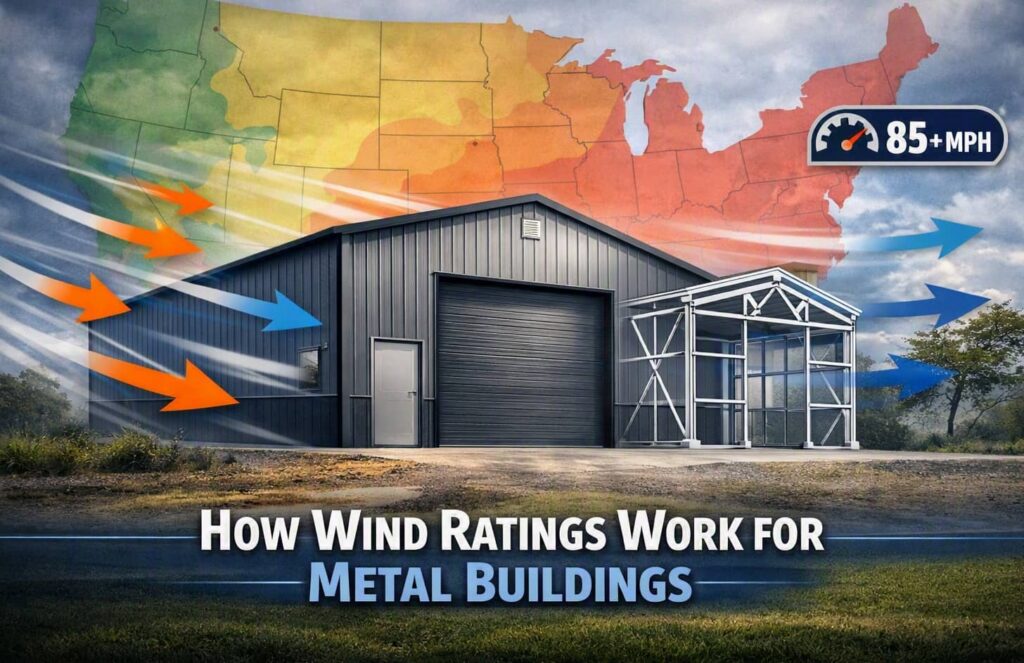
A wind rating is the maximum sustained wind speed a metal building is engineered to withstand without structural failure. Building codes set this rating using a 3-second gust measurement, not an average daily breeze. The rating is only valid when the entire system, including frame gauge, panels, fasteners, and anchors, is built to match it. A number on a quote means nothing without the engineering behind it.
How Wind Ratings Work for Metal Buildings
Key Takeaways
- A metal building wind rating is the design wind speed the structure can resist without failure, based on a 3-second gust rather than sustained wind.
- Typical ratings run 80 to 120 mph for carports, 90 to 140 mph for garages, 100 to 150 mph for barns, and 120 to 180 mph for commercial buildings.
- Coastal and hurricane-prone areas often require 130 mph or higher for carports and 150 mph or higher for garages.
- Exposure B, C, and D describe how open the surrounding terrain is, and the same wind speed creates more pressure in open or coastal exposures.
- The importance factor multiplies design loads by occupancy, from 0.87 for low-hazard storage to 1.25 for essential facilities.
- Wind resistance depends on frame gauge, panel fastening, and anchorage, with UL-580 used to test uplift resistance of roofing assemblies.
- A certified building includes an engineer’s seal, which is usually required to obtain a permit and pass inspection.
What does a wind rating actually measure on a metal building?
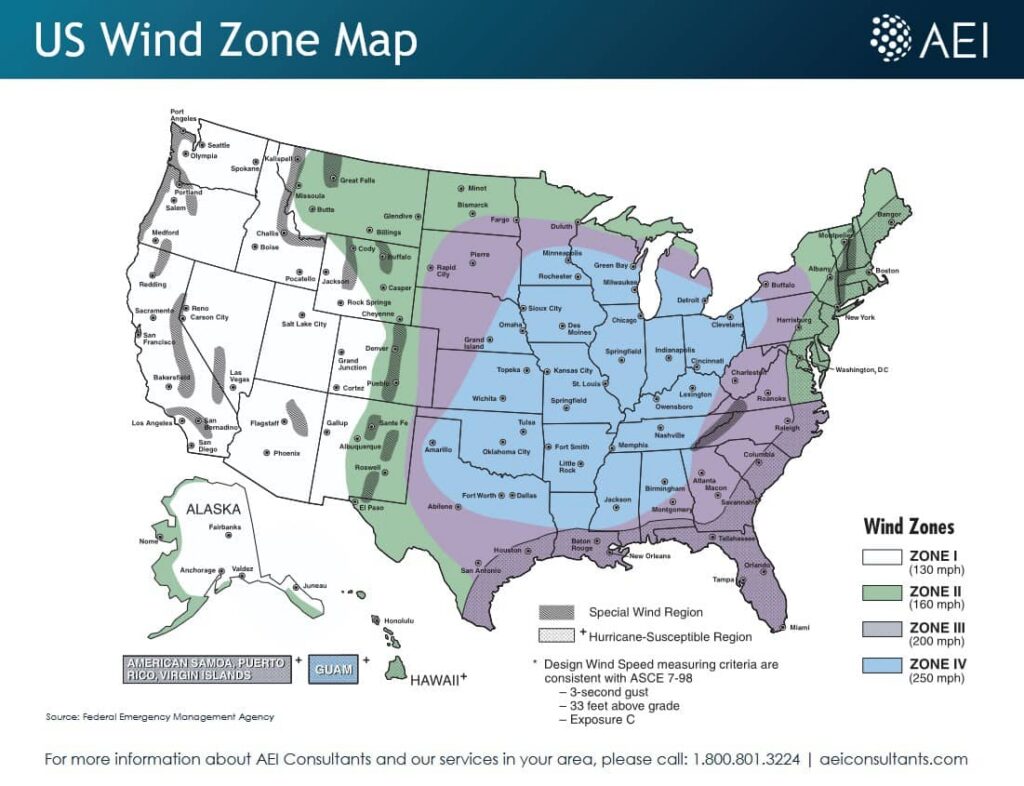
A wind rating measures the design wind speed a structure is engineered to resist without failure, typically expressed in miles per hour. FEMA wind zones and code design speeds are based on a 3-second gust, not sustained wind speed.Sustained wind is the average speed over a short period, while gusts are brief, sudden increases in wind speed. Gusts drive the engineering because they create the highest instantaneous pressures on a building’s surfaces. A structure must resist these peak forces, not just the average wind. No practical rating survives a direct EF5 tornado with wind speeds over 200 mphs. Ratings are designed for code-level storm events, not the most extreme tornadoes.
What wind speed rating do you need for your area and building type?
Typical wind speed ratings vary by building type. Standard metal carports often have ratings between 80 and 120 mph, while metal barns fall between 100 and 150 mph. Metal garages commonly range from 90 to 140 mph, and commercial metal buildings typically span 120 to 180 mphs. Hurricane-prone and coastal regions push recommendations higher. In these areas, metal carports and covers rated for 130 mph or more are recommended, and reinforced metal garages with ratings of 150 mph or higher are advised. The required number comes from local code, not from a national default. Zip-code-based wind and snow load lookups are the standard first step with most suppliers.
How do exposure categories change the wind load on a metal building?
Exposure categories describe the surrounding terrain and how it affects wind pressure on a structure. Exposure B applies to urban, suburban, or wooded terrain with closely spaced obstructions under 30 feet tall.
Exposure C covers open rural terrain, farmlands, grasslands, and hurricane-prone shorelines. Exposure D applies to flat, unobstructed land and areas within a mile of large open water.
Exposure A is an outdated designation no longer applied under ASCE standards. The same wind speed produces higher pressure in Exposure C or D than in Exposure B because open terrain offers less friction to slow the wind.
What is an importance factor and why does it raise the required rating?
The importance factor is a multiplier applied to design loads based on a building’s occupancy and the consequences of failure. It directly raises or lowers the required wind resistance for the same location.
- Category I uses a factor of 0.87 for low-hazard storage buildings.
- Category II uses 1.0 for standard carports, garages, and typical workshops.
- Category III uses 1.15 for schools and assembly buildings.
- Category IV uses 1.25 for essential facilities like fire stations.
Most homeowner and small business metal buildings fall under Category II. A higher importance factor means a stronger, more expensive structure for the same location because the design loads are multiplied upward.
How is a metal building engineered to hit a specific wind rating?
Wind resistance depends on the entire structural system working together. Frame gauge and truss design form the core, and many manufacturers use 12- or 14-gauge steel frames to reach ratings up to 170 mph.
Panel gauge, rib profile, and fastener type and spacing determine whether roof and wall panels stay attached under wind pressure and suction. Many standard metal roofing systems are designed to withstand wind speeds of up to 140 mph.
Anchorage to a slab, footings, or ground anchors resists uplift that tries to peel the building off its base. UL-580 is the standard uplift resistance test for roofing assemblies.
What does an engineer's seal and certification mean for your wind rating?
An engineer’s seal means a licensed professional engineer has reviewed and stamped the building’s drawings. The seal confirms the design meets the wind and snow loads required by local code for that specific site. Certified buildings come with these stamped drawings, which are typically required before a permit can be issued. A quoted rating without a seal for your state or county may not pass inspection. The seal represents legal accountability. The engineer certifies that the frame, panels, fasteners, and anchorage work together to resist the specified loads.
Does a higher wind rating cost more, and what should you ask before buying?
Yes, a higher wind rating costs more. The cost drivers include heavier gauge steel, more fasteners, upgraded anchors, added bracing, and higher engineering fees.
Compare quotes only when wind ratings and specifications match. A cheaper building might simply have a lower, potentially insufficient wind rating for your area.
Ask whether the rating covers panels and doors, what anchoring system is included, whether a seal will be provided for your state, and what exposure category and importance factor were used. ROI Metal Buildings supplies certified metal hangars, garages, barns, and commercial structures engineered to the wind and snow loads of the your zip code.