The four main types of hangar doors are sliding, bi-fold, hydraulic, and vertical lift. Each type differs in upfront cost, sealing performance, space requirements, and automation compatibility. The right choice depends on aircraft size, local climate, how often the door cycles, and long-term budget. This article compares each system so facility planners can match the door to operational needs rather than price alone.
Key Takeaways
- The four main hangar door types are sliding, bi-fold, hydraulic, and vertical lift.
- Sliding doors cost the least upfront but seal the worst, making them a poor fit for climate-controlled hangars.
- Bi-fold doors use nylon straps or steel cables that can stretch with repeated use and require regular inspection.
- Hydraulic doors seal tightly and lock from the inside, but their open panel can catch wind like a sail.
- Vertical lift doors offer the best wind-load resistance and automation compatibility but need structural support for overhead stacking.
- Insulated bi-fold and vertical lift doors significantly reduce heating and cooling costs in temperature-controlled facilities.
- Cost order runs sliding, then bi-fold, with hydraulic and vertical lift the most expensive due to engineering and automation.
What are sliding hangar doors and how do they work?
Sliding hangar doors are horizontal panels that travel along a track, operated manually or with motorized assistance. They are one of the most traditional and widely used systems in aviation facilities.
Bottom-rolling variants ride on a rail embedded in the foundation. According to Vortex Doors, bottom-rolling doors are powered by a direct chain drive containing only one moving part: the motor. This mechanical simplicity makes them highly durable and easy to repair.
The pros of sliding doors include a simple mechanical design with fewer moving parts, suitability for large openings, and the lowest upfront cost among hangar door types. They are also easy to maintain compared to more complex systems.
The cons are significant. Sliding doors require clear space along the sides of the hangar for panels to stack. Tracks can collect debris, ice, and dust, which interferes with operation. Sliding doors are considered the weakest at sealing out pests and birds and sealing in climate-controlled air.
Bottom rolling doors are the only viable option for extremely large buildings, such as those housing single-aisle passenger jets and larger aircraft. However, the exposed bottom rail faces the elements and cannot be placed inside the building.
What are bi-fold hangar doors and what are their pros and cons?
Bi-fold hangar doors open like an accordion, folding in half as they raise. According to Vortex Doors, bi-fold doors are powered by a jackshaft connected to a dual chain and spoke assembly.
The lift mechanism uses heavy nylon straps or steel cables to winch the panels open. Nylon straps and an electric winch motor are inexpensive compared to hydraulic systems. However, repeated use can stretch the straps or cables, which requires regular inspection.
Bi-fold doors offer excellent sealing and insulation, making them a strong choice for climate-controlled hangars. They open and close faster than sliding doors and require less lateral space. These advantages make bi-fold systems popular for facilities that prioritize environmental control.
The cons include a higher initial investment than sliding doors. Bi-fold doors also require regular inspection of cables and hinges, and they need sufficient vertical clearance to operate. According to Mototok, bi-fold doors are not efficient with vertical space and are better suited for general aviation than business aircraft.
Bi-fold doors can use heavier construction materials such as welded steel. This adds structural strength but also increases the load on the lifting mechanism, reinforcing the need for consistent maintenance.
What are hydraulic hangar doors and when should you choose them?
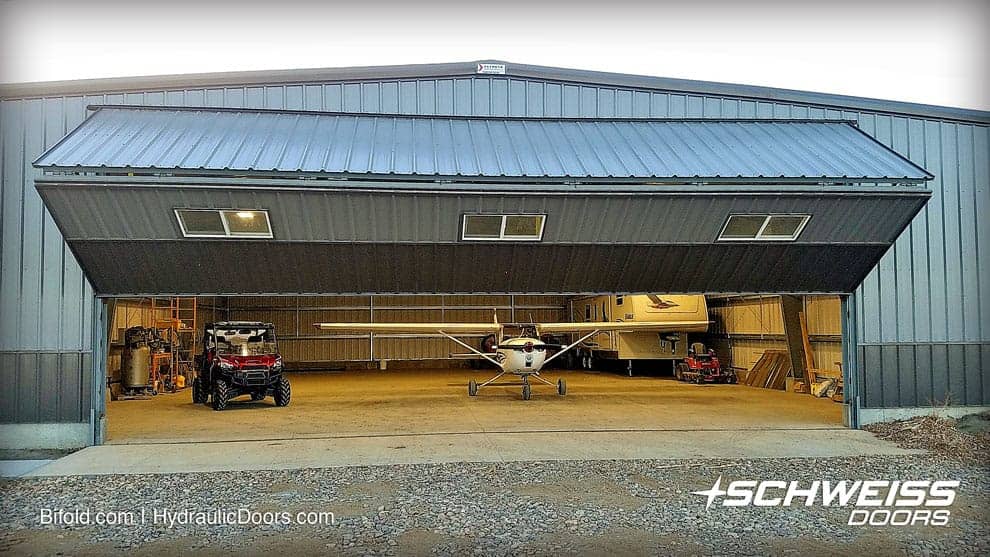
Hydraulic hangar doors operate as a single solid panel that swings up and out from horizontal to vertical using hydraulic cylinders. Hydraulic doors rely on two lift points, with hydraulic cylinders positioned on either side of the frame.
Hydraulic doors provide a tight seal against moisture, debris, and pests. They lock from the inside without a separate locking mechanism, and they create a clean opening with no overhead tracks. Hydraulic doors allow a lot of headspace in the opening, making it possible to lower the hangar’s initial build height.
The cons are notable. Hydraulic doors carry the highest upfront and installation costs. The hydraulic system requires specialized maintenance, and power failure can limit operation without backup systems. The open panel extends far out in front of the building and can catch the wind like a sail.
Hydraulic doors must be relatively lightweight because raising the door requires substantial hydraulic pressure. According to Mototok, hydraulic swinging doors are best used in environments that do not experience chronic high winds. When open, the panel can double as a covered apron, which is a useful feature for some operations.
What are vertical lift hangar doors and where are they used?
Vertical lift hangar doors open straight upward and stack above the door opening, guided by side tracks. This design maximizes interior and exterior space because the door does not require side clearance.
The pros of vertical lift doors include suitability for very wide hangar openings, high wind-load resistance, and good automation compatibility. These characteristics make them a reliable choice for facilities that need consistent performance under demanding conditions.
The cons involve structural requirements. Vertical lift doors require a strong building structure to support overhead stacking. They also carry higher engineering and installation complexity, and maintenance access can be challenging because components are positioned above the opening.
According to RCI Doors, vertical lift doors are commonly chosen for large commercial and military hangars where performance and reliability outweigh initial cost. The overhead stacking design keeps the ground area clear, which is valuable for high-traffic aviation operations.
Which hangar door type is best for extreme weather and energy efficiency?
Bi-fold and vertical lift doors perform better in extreme climates due to superior sealing and insulation. Insulated bi-fold and vertical lift doors significantly reduce heating and cooling costs in temperature-controlled facilities.
Sliding doors are the weakest at sealing in climate-controlled air and keeping out pests and birds. This makes sliding systems a poor fit for hangars that need consistent interior temperatures or protection from wildlife intrusion.
Hydraulic doors seal tightly against moisture and debris, which supports energy efficiency when closed. However, the open panel’s wind exposure is a planning concern, especially in regions with chronic high winds. The panel can catch wind like a sail and place stress on the hydraulic system.
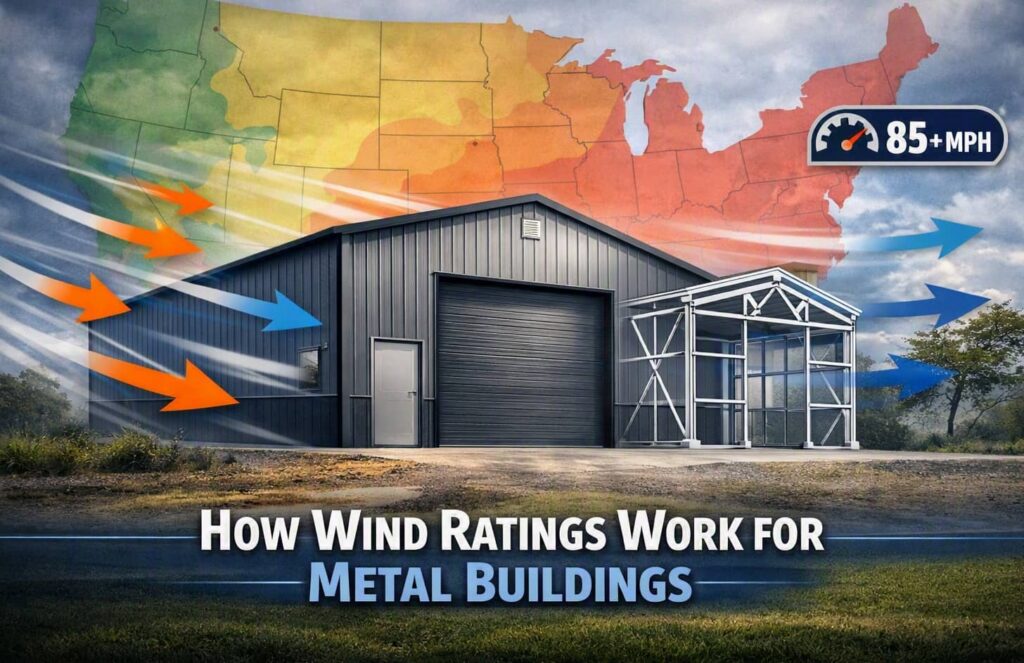
Regional conditions drive door selection. Hurricane wind loads in Florida demand high wind-load resistance, while snow and ice buildup in northern climates requires doors that can operate reliably in freezing conditions. Bi-fold and vertical lift systems generally handle these challenges better than sliding doors.
How do the types of hangar doors compare in cost and maintenance?
The basic cost order runs from sliding doors as the most affordable upfront, followed by bi-fold, with hydraulic and vertical lift doors the most expensive due to engineering and automation requirements.
Maintenance costs vary significantly by system. Nylon straps and an electric winch motor are inexpensive, whereas hydraulic systems are expensive to service. This cost difference affects long-term ownership budgets.
Sliding and bottom-rolling doors need wheel, track, and alignment upkeep. Bi-fold doors need strap, hinge, and cable inspection. Hydraulic doors need fluid and seal checks. Each system has specific maintenance requirements that facility managers should plan for.
Regular preventative maintenance on a hangar door helps it work better and last longer. Unpowered rolling doors are very low maintenance, but jams in the track can stop extremely heavy panels and require significant effort to clear.
How do you choose the right hangar door for your facility?
Choosing the right hangar door involves balancing aircraft size and movement frequency, local wind loads and climate, available interior and exterior space, energy efficiency goals, maintenance capability, and long-term operating costs. These factors determine which system will perform reliably over the life of the facility.
Matching door type to use case is essential. Hydraulic doors suit operations needing maximum clear height and minimal headroom. Bi-fold doors work well for tall, wide openings with limited side space. Sliding or bottom-rolling doors are the standard choice for multi-bay MRO environments and the largest buildings, where their scalability and independent bay operation provide clear advantages.
ROI Metal Buildings designs steel aviation complexes and aircraft hangars with resilience, versatility, and ease of construction in mind. Door-type planning is part of the broader structure decision, because the building frame must support the chosen door system’s loads and movement.
The same tradeoffs apply to other large clear-span steel buildings. ROI Metal Buildings builds private equestrian riding arenas with the same customization approach, matching door systems to operational needs rather than treating doors as an afterthought.
Matching door type to operational environment, not upfront price alone, protects both current operations and future expansion. A door that costs less initially but seals poorly or requires excessive maintenance will create higher long-term costs.
Building an Aircraft Hangar?
We Can Help. Tell us about your needs, site, and timeline. Our team will build a free, no obligation, custom quote engineered for your operational needs.