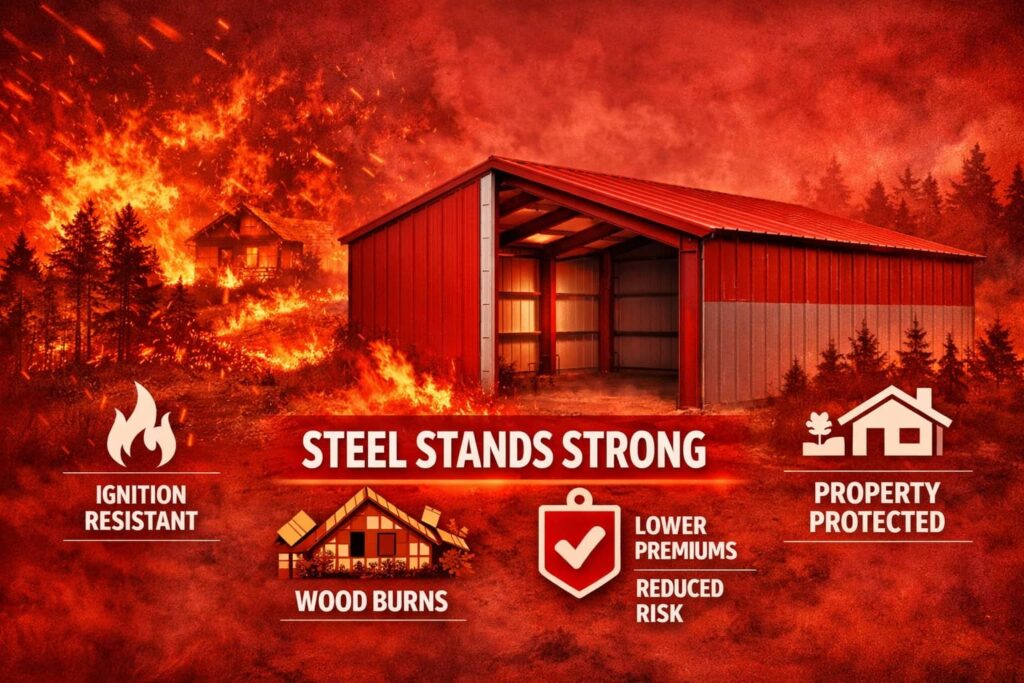
While metal buildings offer better protection against wildfire damage than wood structures, fire resistant metal buildings are not fireproof. Steel can lose strength under extreme heat, and proper design, insulation, and fire‑rated assemblies are essential for performance. Always consult local building codes and fire‑rating standards when planning a structure in wildfire‑prone areas.
How Steel Structures Perform in Wildfire Zones
The latest reporting on the West’s record‑breaking heat waves shows a pattern that’s impossible to ignore: hotter summers are driving longer, more aggressive wildfire seasons, and the structures that fail fastest are the ones built from combustible materials. When temperatures stay high for weeks and vegetation dries into tinder, wildfires radiate heat far beyond the flame front, melting siding, igniting roofs, and overwhelming traditional wood construction. In that environment, fire resistant metal buildings, engineered steel building fire resistance, and predictable metal building fire ratings aren’t niche advantages; they’re survival tools. And insurers know it.
Metal Buildings consistently show lower total‑loss rates in wildfire zones, which is why underwriters increasingly reward them with lower premiums, fewer restrictions, and better long‑term cost stability.
Steel’s Fire Resistance Is Predictable
When a wildfire gets close to a building, the real concern is how the structure will respond under heat. Wood is inconsistent in these situations. It can ignite at lower temperatures, it adds fuel once it’s burning, and its structural failure is hard to predict.
Steel offers a more reliable performance profile. It doesn’t ignite, it doesn’t feed the fire, and its behavior under heat is well‑documented. Because of that, fire resistant metal buildings can be engineered with specific metal building fire ratings, insulated panels, and coatings that slow heat transfer. In wildfire‑prone areas, having a material that reacts consistently under stress is a major advantage.
This is why steel building fire resistance routinely outperforms wood in post‑fire evaluations. Even when exposed to heavy radiant heat, steel structures often stay intact long enough for fire crews to respond or for the fire front to move past. That predictable performance is also one of the reasons insurers view steel as a lower‑risk option in wildfire zones, which can translate into more stable premiums and fewer coverage limitations.
Radiant Heat: The Real Wildfire Threat
Most wildfire damage doesn’t always come from flames touching a building. It comes from radiant heat (the high‑temperature energy that can ignite wood siding, soften roofing materials, and weaken structural components) even when the fire itself is still yards away. With hotter, longer fire seasons becoming the norm, radiant heat has become one of the main reasons traditional construction struggles in wildfire‑prone areas.
Steel handles this differently. It doesn’t ignite under radiant heat, and it doesn’t add fuel to the fire. A steel building fire rating reflects how long the structure can maintain its integrity under sustained heat, which is a major advantage when conditions change quickly. In many wildfire scenarios, that extra time is the difference between minor exterior damage and a complete structural failure. This predictable performance is one of the key reasons insurers tend to favor fire resistant metal buildings in high‑risk regions; lower ignition risk leads to fewer total‑loss claims and more stable long‑term premiums.
Steel vs Wood in Wildfire Zones
Wood structures fail in three predictable ways during wildfires:
- They ignite quickly under radiant heat
- They contribute fuel to the fire
- They collapse as load‑bearing members burn
Steel structures fail differently:
- They resist ignition
- They maintain structural integrity longer
- They can be engineered to meet specific fire‑rating requirements
This is why steel vs wood fire risk isn’t a close comparison. Steel wins every time in wildfire conditions.
Why Insurers Favor Steel in Wildfire‑Prone Regions
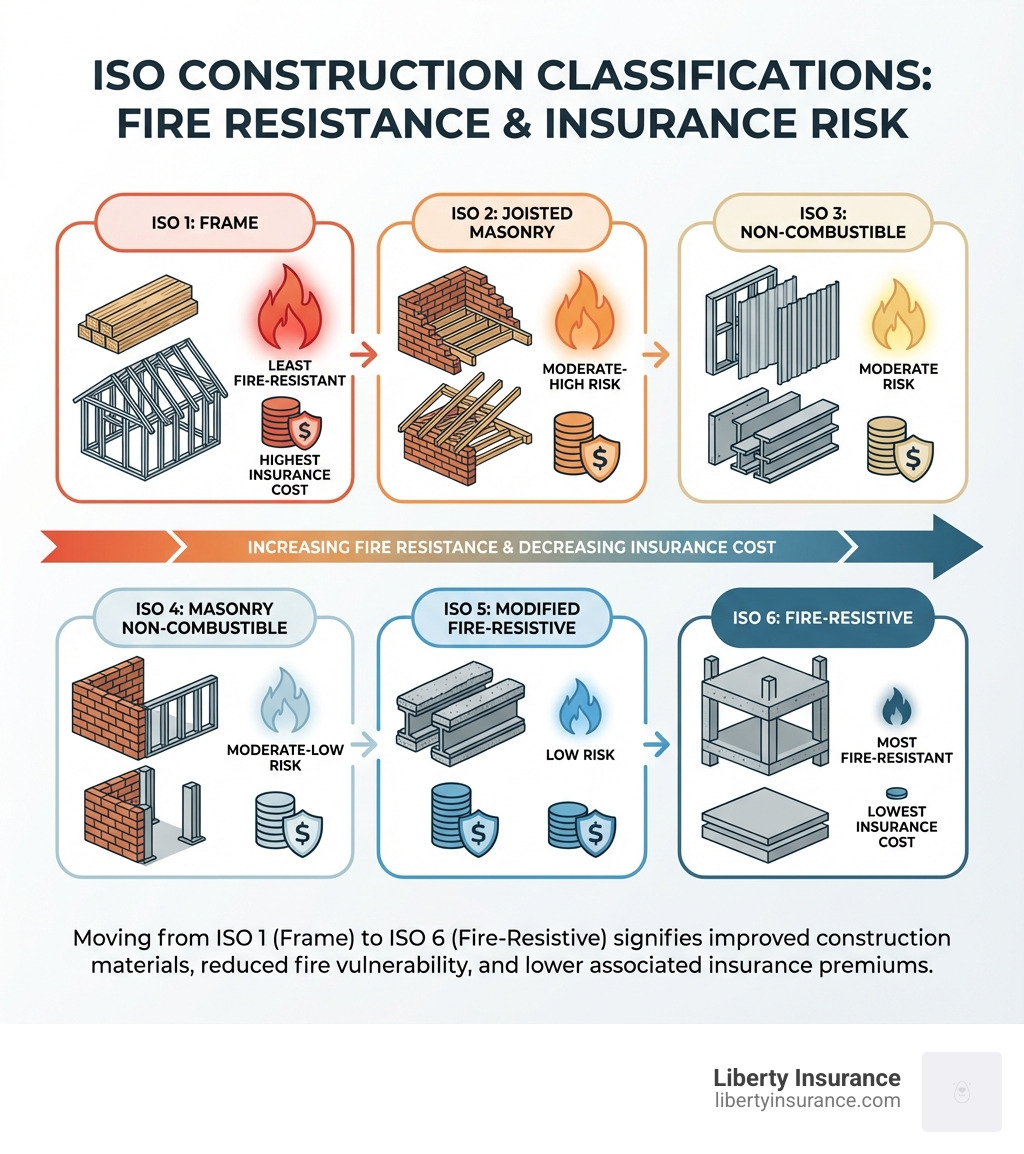
Insurance companies aren’t focused on design trends or building styles. Their decisions come down to measurable risk: ignition potential, structural failure under heat, total‑loss probability, and what it costs to repair or replace a building after a wildfire. Steel performs better across all of those categories, which is why fire resistant metal buildings often qualify as lower‑risk structures in high‑exposure areas.
When insurers review a building, they look at how easily it can ignite, how predictable its structural performance is under radiant heat, and whether it’s likely to become a total loss if a wildfire moves through the area. Wood structures tend to score higher on every risk factor. Steel doesn’t ignite, it doesn’t add fuel to the fire, and its behavior under heat is consistent, which is reflected in standardized metal building fire ratings.
Because steel buildings are less likely to suffer catastrophic damage, their long‑term cost profile is more stable. Fewer total‑loss claims and lower rebuild costs translate into better underwriting outcomes. For property owners, that often means steadier premiums, fewer coverage limitations, and more favorable options in wildfire‑prone regions.
Insurers don’t advertise a preference for steel, but their guidelines make it clear: in areas facing hotter summers and longer fire seasons, steel building fire resistance aligns better with the risk models they rely on.
Metal Building Cost Savings: The Hidden Wildfire Advantage
Wildfire performance has a direct impact on long‑term costs. When a structure is less likely to ignite or suffer major damage from radiant heat, the financial ripple effect is noticeable. Fire resistant metal buildings typically see fewer total‑loss events, which helps stabilize insurance premiums, reduces repair expenses, and lowers the overall cost of ownership in high‑risk regions.
Steel’s predictable behavior under heat also means fewer structural surprises after a fire. Buildings with higher metal building fire ratings tend to avoid the extensive rebuilds that wood structures often require. That reduces downtime, limits replacement costs, and keeps long‑term maintenance more manageable.
This is why metal building cost savings and wildfire performance are closely connected. Steel structures help property owners control expenses over the life of the building, especially in areas where wildfire risk continues to rise.
Our Research Indicates: Fire‑resistant metal buildings generally carry 15–30% lower insurance premiums than comparable wood‑framed structures because insurers classify steel as noncombustible and wood as combustible. In wildfire‑exposed regions, that advantage becomes even more significant, with non‑sprinklered metal buildings often receiving premium reductions in the same 15% range due to their lower ignition potential and reduced total‑loss risk.
The Bottom Line for Buyers in Wildfire Regions
If you’re building in Colorado, Montana, Utah, Arizona, or any region where wildfire behavior is intensifying, steel is a risk‑management strategy. A steel structure gives you:
- better fire resistance
- predictable performance under heat
- lower insurance exposure
- reduced lifetime costs
- higher structural reliability
And insurers notice. Steel buildings don’t eliminate wildfire risk, but they dramatically reduce the likelihood of catastrophic loss. In a world where wildfire seasons are longer, hotter, and more destructive.
Ready for a Fire‑Rated Metal Building? ROI Can Help.
If you’re building in a wildfire‑prone area and want a structure that holds up under heat, stays predictable during fire season, and helps keep insurance costs under control, ROI Metal Buildings can walk you through the best options. Our team designs fire resistant metal buildings with the right assemblies, panel systems, and ratings for your location; whether you need a shop, barndominium, commercial building, or a full‑scale steel structure.
If you’d like pricing, design guidance, or a fire‑rating recommendation for your project, reach out and we’ll get you a clear, no‑pressure quote.
FREE Estimate
We offer some of the most competitive pricing in the country, and we’re happy to review your current quote to make sure you’re getting the right fire‑rated metal building at a fair price. If something looks off, we’ll tell you; and if we can beat it, we will.