What Is Cold-Formed Steel?
Common Applications for Cold-Formed Steel Buildings
- Industrial Warehousing – Storage facilities, distribution centers, and logistics hubs that benefit from clear‑span layouts and fast construction.
- Manufacturing Facilities – Light to medium industrial production spaces requiring durable framing and flexible interior configurations.
- Agricultural Buildings – Barns, equipment storage, feed buildings, and workshops that need corrosion‑resistant materials.
- Commercial Shops – Retail stores, auto shops, and service centers using efficient, low‑maintenance structures.
- Office and Mixed‑Use Spaces – Multi‑purpose layouts with partition flexibility and energy‑efficient envelope options.
- Vehicle Storage – Garages, fleet storage, and maintenance bays with customizable door and bay configurations.
- Community and Municipal Buildings – Fire stations, utility buildings, and public works facilities needing long‑term durability.
- Workshops and Small Businesses – Trades, fabrication shops, and contractor spaces that benefit from quick build times and scalable designs.
What Is Red Iron Steel?
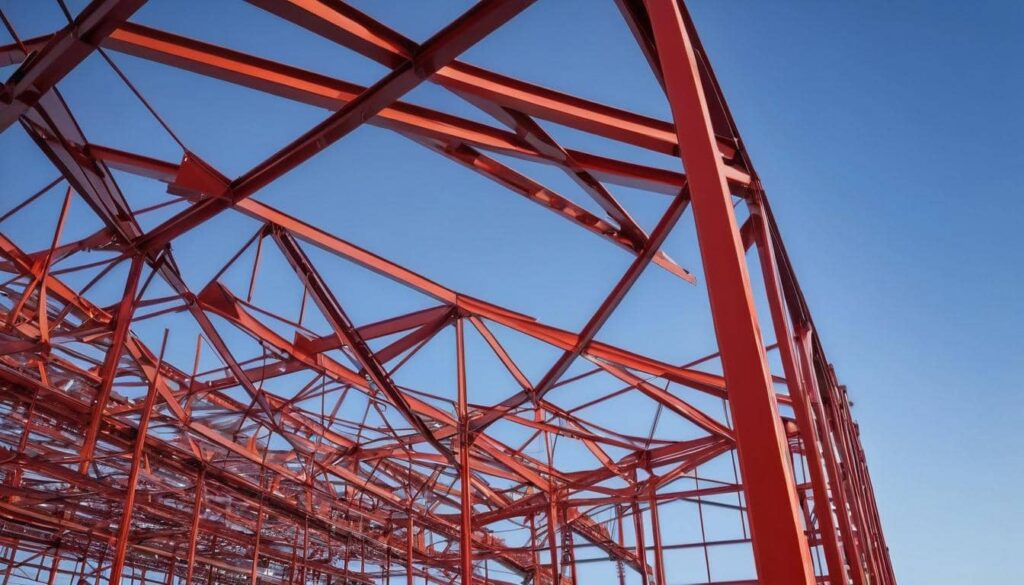
Red iron steel is hot-rolled structural steel formed at high temperatures, producing thicker, heavier members than cold-formed alternatives. Its name comes from the distinctive red-oxide primer coating applied to the steel surface. That coating is functional, not cosmetic: it creates a waterproof barrier that resists corrosion, rust, and moisture damage over decades of exposure.
The defining characteristic of red iron is its load-bearing capacity. The material’s strength allows for wide-open interior spans without the need for interior support columns, making it the standard choice for facilities that require unobstructed floor space or overhead crane systems. Red iron buildings also carry lifetime warranties on primary structural components from most manufacturers, a reflection of the material’s proven longevity. Fire resistance is another core advantage. Steel’s higher melting points mean red iron structures can contain fires more effectively than other construction types, which may reduce insurance premiums for commercial operators.
Common Applications for Red Iron Buildings
- Industrial Warehouses – Ideal for large clear‑span storage, distribution, and logistics operations requiring durable framing.
- Manufacturing Facilities – Supports heavy equipment, overhead cranes, and high‑load production environments.
- Agricultural Structures – Barns, equipment storage, hay sheds, and livestock shelters with long‑term corrosion resistance.
- Commercial Retail & Service Centers – Auto shops, hardware stores, and retail spaces needing open interiors and customizable layouts.
- Aircraft Hangars – Wide‑span framing accommodates large doors and unobstructed interior space for aircraft storage.
- Municipal & Utility Buildings – Fire stations, public works facilities, and emergency service structures built for longevity.
- Workshops & Contractor Spaces – Fabrication shops, trades, and small businesses that benefit from strong framing and flexible expansion.
- Equipment & Fleet Storage – Heavy‑duty garages and maintenance bays for trucks, machinery, and commercial vehicles.
Cold-Formed Steel vs. Red Iron: Key Differences Compared
Material Strength and Load-Bearing Capacity
Construction Speed and Assembly
Cold-formed steel buildings go up faster. The components bolt together with included anchor bolts, and no welding is required at any stage.
Red iron construction moves more deliberately. The heavier components often require crane rental for placement. Foundations must be more substantial, and wet-set anchors need precise placement before the concrete pour. Welding is frequently necessary for connections, which adds skilled labor to the job site. These factors extend the timeline, though the result is a structure built to handle far greater demands.
Cost Comparison
Warranty and Longevity
Design Flexibility
Disadvantages of Each Building Type
Disadvantages of Cold-Formed Steel
Cold-formed steel has clear structural limits. Its lower load-bearing capacity rules out large-span commercial or industrial applications that require heavy equipment support. The thinner material is more susceptible to denting or damage during transport and construction if not handled carefully. Projects are effectively limited to smaller scales; cold-formed steel is not a viable option for mega-warehouses or aircraft hangars.
Disadvantages of Red Iron Buildings
Red iron’s upfront costs are higher across the board: materials, foundation work, and skilled labor all add to the initial investment. Site preparation is more complex, and the heavier components extend the construction timeline. The material is less energy-efficient by default, requiring careful insulation design to achieve thermal performance comparable to cold-formed structures. For residential-style barndominiums with standard room layouts, red iron can be overbuilt and less cost-effective than cold-formed alternatives.
How to Choose: Cold-Formed vs. Red Iron for Your Project
Frequently Asked Questions
Is red iron or cold-formed steel stronger?
Red iron is significantly stronger and thicker, making it the choice for heavy-duty applications that demand high load-bearing capacity and long clear spans.
Which is cheaper: cold-formed or red iron?
Cold-formed steel has lower upfront costs due to lighter materials and simpler foundations. Red iron offers better long-term value for large projects where its durability and lifetime warranty offset the higher initial investment.
Can I build a barndominium with cold-formed steel?
Yes. Cold-formed steel is increasingly popular for residential barndominiums because of its faster assembly, design flexibility, and compatibility with standard room layouts.
Do I need a crane for cold-formed steel buildings?
No. Cold-formed buildings typically require only scissor lifts, boom lifts, or small forklifts for assembly.
Which type has better fire resistance?
Red iron has higher melting points and superior fire resistance, which may lower insurance premiums for commercial and industrial buildings.
Conclusion: Making the Right Choice for Your Metal Building
Cold-formed steel and red iron both deliver exceptional value compared to traditional wood or concrete construction. The decision between them is not about which material is better in absolute terms; it is about which material aligns with your project’s size, budget, and structural demands. Cold-formed steel wins on speed, affordability, and residential-scale applications. Red iron dominates where strength, span, and long-term durability are non-negotiable. Match the material to the mission, and you will end up with a building that serves its purpose for decades. For expert guidance on pre-engineered kits or a customized quote tailored to your project, contact the team at ROI Metal Buildings to explore your options.