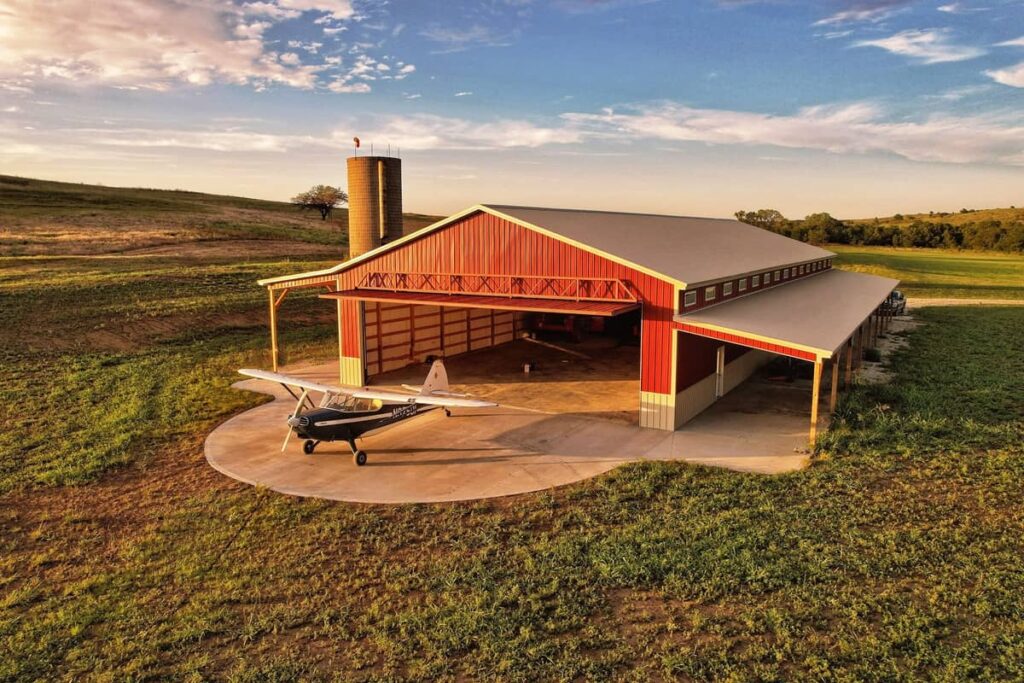
If you are researching how much it costs to build an aircraft hangar, you have probably already discovered that the numbers are all over the map. Some sources quote $15 per square foot for a basic metal shell, while finished hangars with doors, insulation, and utilities routinely cross $150 per square foot. Both figures are technically correct, but only one reflects what you will actually write a check for when the project is done. This guide breaks down real-world costs for 2026, drawing on contractor data, pilot forum experiences, and the perspective of ROI Metal Buildings, which frames hangar construction as both asset protection and a potential income stream. Whether you are pricing a 40×40 box hangar or a 15,000-square-foot jet facility, you will leave with a budget range you can take to the bank.
The complete cost to build a finished steel aircraft hangar in 2026 lands between $50 and $150 per square foot. Basic metal kits alone start at $25 to $35 per square foot, but a kit is not a building: it is a pile of steel until you add a concrete slab, hangar doors, labor, permits, and site preparation. The $15-to-$25-per-square-foot figures that circulate on generic search results describe a raw metal box with no floor, no doors, no electrical, and no insulation. That number is a starting point for a DIY shell, not a finished hangar you can taxi into. From the ROI Metal Buildings perspective, a 15,000-square-foot standalone hangar runs roughly $900,000 to $1.8 million all-in, but rental income from larger jet spaces, which fetch $4,000 to $7,000 per month, can meaningfully offset ownership costs. With material and labor inflation still pressing the construction sector, expect 2026 pricing to run 5 to 10 percent above 2024 and 2025 averages.
Aircraft Hangar Cost per Square Foot by Hangar Type
Steel kit pricing, whether you act as your own general contractor or hire a professional crew, starts at $25 to $35 per square foot for the kit alone and climbs to $50 to $150 per square foot for a fully erected, code-compliant structure. Canopy or tent hangars, which use fabric membranes stretched over aluminum frames, offer the lowest entry point at $2 to $6 per square foot for materials, with total small-unit costs between $10,000 and $30,000. Wood construction, less common but favored by some airpark homeowners, runs comparable to steel at $80 to $120 per square foot and provides superior insulation for living quarters.
6 Key Factors That Drive Your Aircraft Hangar Cost
Size and clear-span design
Location and site preparation
Material choice
Hangar door selection
Insulation, HVAC, and interior amenities
Permits and compliance
Regional Cost Variations
Examples: Hangar Cost Breakdown by Size
- A 40x40 hangar, offering 1,600 square feet of space, fills a gap that few competitors address directly. Extrapolating from the $60-to-$120-per-square-foot range for finished steel construction, expect a total project cost between $96,000 and $192,000. This size accommodates most single-engine piston aircraft and light twins.
- A 60x60 hangar at 3,600 square feet lands between $300,000 and $400,000 total, or $83 to $111 per square foot. This figure aligns with both contractor estimates and the $90,000 Colorado forum example, which came in on the low end due to owner involvement and a basic interior.
- A 100x100 hangar spans 10,000 square feet and costs $600,000 to $1.5 million depending on door type, insulation, and interior finish. The forum-reported $300,000 heated box at this size represents an outlier, likely reflecting owner-supplied labor and minimal site work.
- Large jet hangars exceeding 15,000 square feet, the category ROI Metal Buildings specializes in, run $900,000 to $1.8 million all-in. These facilities typically include high-lift hydraulic doors, fire suppression systems, and office or shop space.

Steel vs. Canopy vs. Wood: Which Build Is Right for You?
Steel remains the default choice for most hangar projects, and for good reason. Clear-span steel buildings deliver unmatched durability, require minimal maintenance, and hold their value on the resale market. If you plan to rent out hangar space, steel is the only material that commands premium rates from jet owners and flight departments. The higher upfront cost is partially offset by lower insurance premiums and a 40-to-50-year service life with basic upkeep.
Canopy and tent hangars serve a different purpose entirely. At $10,000 to $30,000 for a small-to-medium unit, they provide immediate, low-commitment shelter for aircraft that would otherwise sit on the ramp. They work well for seasonal use, temporary storage during construction, or owners who lease airport land and cannot justify a permanent structure. Canopy hangars have essentially zero resale value and cannot be converted to living space, but they solve a real problem at a price point steel cannot touch.
Wood construction occupies a niche that forum contributors defend passionately. For airpark homes where the hangar shares a wall with living quarters, wood framing simplifies insulation, electrical rough-in, and interior finishing. Building a steel shell and then framing interior walls inside it duplicates labor and materials. Wood hangars require more exterior maintenance and may face stricter fire-code scrutiny, but for the owner-builder planning a hangar home, wood often pencils out as the more practical choice.
From a pure return-on-investment standpoint, steel hangars with rental potential offer the strongest long-term case. Canopy hangars provide a low-risk entry point for owners who need shelter now and can upgrade later.
Hidden Costs You Cannot Afford to Ignore
The concrete slab alone adds $6.50 to $8.00 per square foot to your project. For a 60×60 hangar, that is $23,400 to $28,800 before you erect a single steel column. Slab thickness, reinforcement, and surface finishing for aircraft loads push this number higher than a standard garage floor.
Labor for a 60×60 hangar ranges from $65,000 to $125,000 depending on your region and the complexity of the build. This figure covers erection of the steel structure, door installation, and basic interior finishing. It does not include site work, which is a separate line item.
Permits and legal fees, budgeted at $5,000 to $30,000 or more, can spiral when airport authorities invoke federal grant assurances. One forum contributor reported 2.5 years of legal delays and substantial attorney fees while negotiating with a city government and airport manager over grant-related restrictions. These delays are not rare on public-use airports, and they carry carrying costs that no per-square-foot estimate captures.
Insurance for a private hangar typically runs $1,500 to $5,000 per year, a figure no major competitor publishes. Ongoing operational costs, including electricity, heating, and property taxes, add $2,000 to $10,000 or more annually depending on climate, hangar size, and local mill rates.
Is an Aircraft Hangar a Good Investment?
Rental income makes the investment case for hangars larger than a personal single-aircraft box. Older single box hangars rent for $850 to $950 per month, which covers operating costs and provides modest cash flow. Large jet spaces, however, command $4,000 to $7,000 per month, turning a well-located steel hangar into a legitimate income property. At those rates, a $1.5 million jet hangar can generate gross rental income of $48,000 to $84,000 annually before expenses.
Asset protection is the quieter return that does not show up on a cash-flow statement. Aircraft stored outdoors suffer UV damage to paint and interiors, weather-related wear, and increased corrosion risk. A hangar extends airframe life and preserves resale value, which matters when you are protecting a six- or seven-figure asset.
Steel hangars on owned land appreciate with the real estate market, while canopy hangars depreciate to zero over their useful life. Tax benefits, including depreciation and potential Section 179 deductions for hangars used in a business, sweeten the equation, though you should consult a CPA for guidance specific to your situation.
Financing, Permits, and Legal Hurdles (2026 Update)
Financing a hangar build typically involves hangar-specific loans with 5-to-15-year terms, home equity lines of credit for airpark properties, or cash purchases. Traditional commercial lenders understand hangar construction, but expect to provide detailed cost estimates and, if rental income is part of your pro forma, a market analysis of local hangar demand.
Airport grant assurances remain a persistent obstacle on public-use airports. Federal rules designed to keep airport land available for aeronautical use can restrict private hangar construction, limit rental arrangements, and trigger legal reviews that stretch timelines by months or years. Engage an attorney familiar with FAA grant compliance before you sign a ground lease.
Zoning for living quarters inside a hangar is the single most common dealbreaker for airpark dreamers. Most residential zones prohibit hangar homes outright, and even mixed-use or agricultural zones may impose restrictions that make full-time occupancy impractical. Verify local codes before you spend money on architectural plans that include a kitchen and bedroom.
Frequently Asked Questions
How much does it cost to build a 40x40 hangar?
A finished 40x40 steel hangar runs $96,000 to $192,000 based on the $60-to-$120-per-square-foot range for complete construction.
Can I live in my airplane hangar?
Yes, but only if local zoning permits residential use within a hangar structure. Expect costs to jump to approximately $225 per square foot for finished living quarters with kitchens, bathrooms, and climate control.
How much does it cost to build a 5,000-foot runway?
A 5,000-foot runway costs $500,000 to over $2 million depending on surface material, which is typically asphalt or concrete, plus land clearing, grading, and drainage work.
What is the cheapest hangar option?
A canopy or tent hangar at $2 to $6 per square foot for materials, with total small-unit costs between $10,000 and $30,000, represents the lowest entry point for covered aircraft storage.
Start Planning Your Hangar Build with Confidence
Budget $50 to $150 per square foot for a finished steel hangar. The numbers are large, but so is the value of protecting your aircraft and, for larger facilities, generating rental income that offsets ownership costs. A custom quote from a ROI Metal Buildings will refine these ranges for your specific site, size, and use case.
If you’re ready to move forward, reach out for a custom hangar quote and get a build plan tailored to your property.
How Much Does It Cost to Build an Aircraft Hangar? (2026 Price Guide)
This guide breaks down real-world costs for 2026, drawing on contractor data, pilot forum experiences, and the perspective of ROI Metal Buildings, which frames hangar construction as both asset protection and a potential income stream.