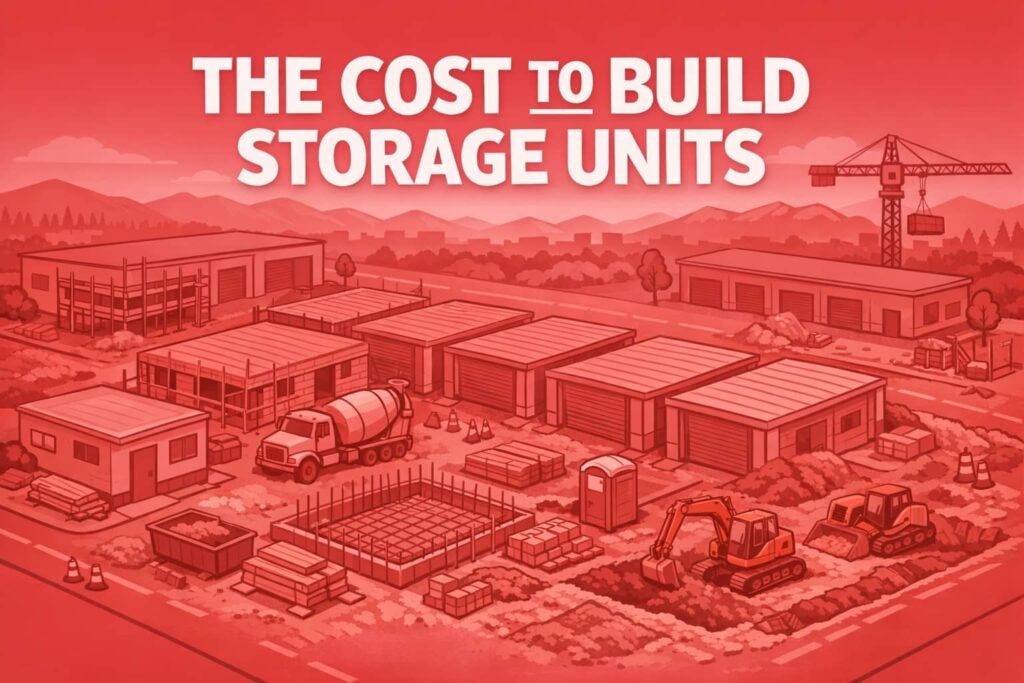
The cost to build storage units figures in this article are indicative estimates only and may differ from actual project costs due to regional labor and material prices, site conditions (soil, grading, access), scope or specification changes, permitting and utility requirements, and market/lead‑time volatility. Use these numbers for preliminary planning only - obtain a site‑specific quote, geotechnical report, and a detailed RFQ to confirm final pricing and schedule.
Considerations and Average Cost to Build Storage Units
Building a self‑storage facility is a capital‑intensive project with many moving parts. Costs vary widely by site, unit mix, climate control, and local regulations. This guide breaks down the 7 real cost drivers, shows how to convert national ranges into a site estimate, and lists the project actions owners and contractors should take to avoid surprises.
1. High‑level cost categories
When budgeting, separate hard costs (direct construction) from soft costs (design, permits, financing) and operating assumptions (OPEX). Typical categories:
- Land acquisition: purchase price, closing costs, and any required easements.
- Site preparation: grading, drainage, retaining walls, demolition, and geotechnical work.
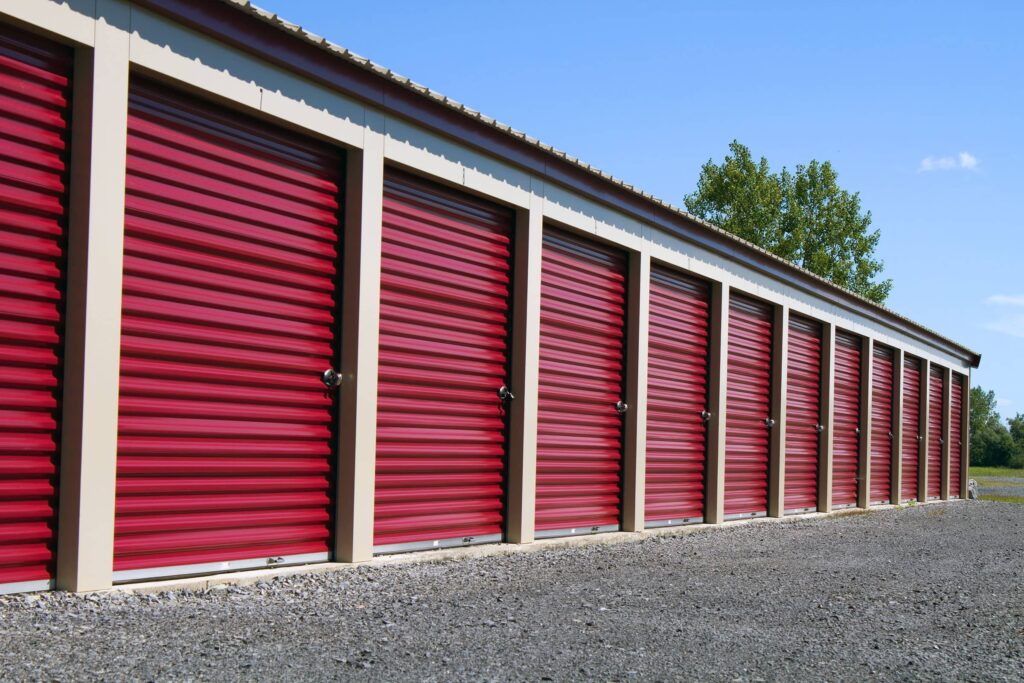
- Building construction: metal building shells, foundations, interior partitions, doors, and roofing.
- Climate control and MEP: HVAC for climate‑controlled units, electrical, plumbing (if required), and fire protection.
- Paving and site improvements: asphalt, curbs, lighting, landscaping, and signage.
- Soft costs: architecture/engineering, permits, impact fees, legal, and financing fees.
- Contingency and escalation: allowances for unknowns and material/labor price movement.
Action for owners: create a line‑item budget using these categories and require bidders to break their proposals into the same buckets for apples‑to‑apples comparison.
2. Typical cost ranges and what they mean
National averages are useful starting points but must be adjusted for local conditions. Typical ranges (illustrative):
- Non‑climate single‑story units (metal buildings): $40–$80 per sq ft installed.
- Climate‑controlled units (interior corridors): $80–$150 per sq ft installed.
- Site preparation and utilities: $5–$25 per sq ft depending on grading, drainage, and utility distance.
- Soft costs and fees: 10–20% of construction hard costs.
- Contingency: 5–15% depending on project complexity.
These ranges reflect wide variability. A flat, well‑served lot with simple single‑story buildings will be at the low end; a constrained urban site with deep utilities and climate control will be at the high end.
Action for owners: convert per‑sqft ranges into per‑unit costs for your target unit mix (e.g., 10×10, 10×20) and run a sensitivity analysis for +/- 15% cost swings.
3. Site factors that drive cost up or down
- Topography and soils: steep grades, rock, or poor soils increase excavation and foundation costs. A geotechnical report early in the process prevents surprises.
- Access and staging: narrow access or limited laydown areas increase labor time and equipment costs.
- Utilities: long runs for power, water, or sewer add significant cost; on‑site septic or well needs change the pro‑forma.
- Zoning and stormwater: detention/retention requirements, curb cuts, and parking minimums can add substantial site work.
- Climate: freeze/thaw cycles, snow loads, and corrosion exposure affect foundation design and finish choices.
Action for owners: commission a site survey and geotech before final budgeting; include utility locate and zoning confirmation in the early scope.
4. Construction choices that change the budget
- Building type: single‑story metal roll‑up units are the most cost‑efficient. Multi‑story or interior‑corridor climate‑controlled buildings require more structure, insulation, and MEP.
- Unit mix: smaller units increase partitioning and door counts, raising per‑sqft costs. Larger units reduce partition cost per square foot.
- Doors and hardware: higher‑duty doors, electronic access control, and security systems add to both CAPEX and OPEX.
- Finishes: galvanized or powder‑coated exterior elements and higher‑grade interior finishes increase initial cost but reduce maintenance.
Action for owners: define the target unit mix and security/finish level early; ask bidders to price alternate mixes so you can see tradeoffs.
5. Operating assumptions and pro‑forma basics
A realistic pro‑forma separates one‑time development costs from ongoing operating costs:
- Revenue drivers: unit mix, local market rents, occupancy ramp (often 12–36 months).
- Operating expenses: management, utilities (especially for climate control), insurance, property taxes, and maintenance.
- Debt service and return targets: interest rate, loan term, and desired cash‑on‑cash return determine feasibility.
Action for owners: build a 5‑year pro‑forma with conservative occupancy ramp and a sensitivity table for rent and occupancy changes.
6. Timeline, permitting, and schedule risks
Typical schedule phases: site due diligence (2–6 weeks), design and permitting (8–20 weeks), construction (12–36 weeks). Longest lead items often include:
- Permitting and plan review: municipal timelines vary; some jurisdictions require multiple hearings.
- Utility extensions: coordination with utility providers can add months.
- Material lead times: metal building lead times can vary; lock pricing and lead times in writing.
Action for owners: build permit and utility milestones into the schedule and require contractors to provide lead‑time commitments for long‑lead items.
7. Risk management and contingency planning
- Contingency sizing: use 5–10% for straightforward builds, 10–15% for complex or uncertain sites.
- Price escalation clauses: consider fixed‑price contracts where possible or include escalation language tied to material indices.
- Insurance and bonding: verify builder’s risk, performance bonds, and liability coverage.
Action for owners: require a clear change‑order process and holdback schedule in the contract to manage scope creep.
Final note
Building a self‑storage facility requires more than a per‑square‑foot number, it demands site‑specific due diligence, a clear RFQ structure, and coordinated design and construction planning to control cost and schedule. Use the budgeting framework in this article to separate hard costs, soft costs, and operating assumptions, and treat national ranges as starting points that must be adjusted for your site conditions and local market.
- Order site due diligence: survey and geotechnical report to validate foundations and drainage assumptions.
- Define unit mix and finishes: decide climate control, door types, and security so bidders price the same scope.
- Prepare a structured RFQ: separate site work, building shells, and MEP to compare bids accurately.
- Build a conservative pro‑forma: model a 12–36 month occupancy ramp and run sensitivity tests for rent and occupancy.
- Set contingencies and contract terms: include escalation language and a clear change‑order process.
For a site‑specific, no‑obligation estimate and help converting these ranges into a firm budget, request a free estimate from ROI Metal Buildings or schedule a Site Review to get tailored pricing.