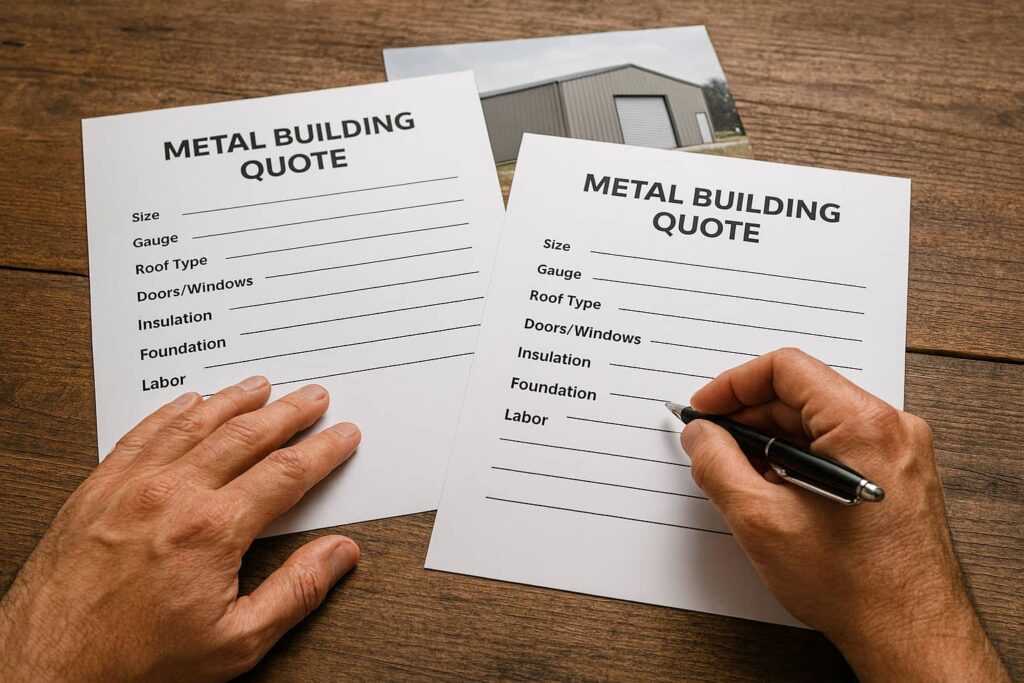
Vetting Metal Building Quotes: Smart Questions & Red Flags
When you’re investing in a metal building—whether it’s for a workshop, storage, commercial space, or agricultural use—the quote you receive is more than just a price tag. It’s a roadmap to your project’s success or a warning sign of potential pitfalls. Knowing how to vet a metal building quote can save you thousands, prevent delays, and ensure your structure meets expectations.
This guide breaks down what to look for, what to ask, and how to compare quotes with confidence.
What Should Be Included in a Metal Building Quote?
Not all quotes are created equal. Some are comprehensive, while others leave out critical components that can inflate your final cost. Here’s what a well-structured quote should include:
Real-world example: A buyer receives a quote for $45,000 for a 40×60 metal building. It looks like a great deal—until they realize it excludes insulation, delivery, and installation. The final cost balloons to $74,000.
Red Flags to Watch For
Spotting red flags early can prevent costly mistakes. Here are common warning signs in metal building quotes:
Smart Questions to Ask Your Supplier
Asking the right questions helps you avoid assumptions and ensures transparency. Here’s a list of essential questions and why they matter:
Example: A supplier quotes $30,000 for a building but uses 29-gauge panels. Another offers 26-gauge for $33,000. The thicker steel may be worth the extra cost for long-term durability.
How to Compare Multiple Metal Building Quotes
When comparing steel building quotes that vary in scope and specs, the goal is to normalize the differences and focus on total value—not just the sticker price.
Start with a side-by-side comparison. Lay out each quote in a simple matrix that includes dimensions, steel gauge, roof type, insulation, doors and windows, foundation, installation, warranty, and total price. This gives you a clear visual of what’s included and what’s missing.
Adjust for missing elements. If one quote includes installation and another doesn’t, estimate the cost of that gap. For example, installation labor might run $3–$6 per square foot, concrete slabs $4–$7, and insulation $3–$7 depending on type. This helps you compare “fully loaded” costs across vendors.
Consider the building’s purpose. A workshop may need insulation and windows, while a storage unit might not. Prioritize features based on how the building will be used, and think about long-term ROI—especially if resale or durability matters.
Factor in location and site-specific costs. Regional requirements like wind or snow loads, seismic ratings, and permit rules can affect pricing. So can delivery distance or tricky terrain. These variables should be part of your comparison.
Request itemized breakdowns. If a quote is vague, ask for details: material costs, labor, freight, engineering, and optional upgrades. Transparency helps you spot hidden fees and make smarter decisions.
Don’t overlook vendor reputation. A slightly higher quote from a reliable company might save you time, stress, and money down the road. Look at years in business, customer reviews, warranty terms, and how responsive they are during the quoting process.
Use a weighted scoring system. Assign importance to each factor—price, scope, quality, reputation, and timeline—and score each quote accordingly. This gives you a more objective way to compare options that aren’t apples-to-apples.
Common Misunderstandings to Avoid
When comparing steel building quotes, it’s crucial to look beyond the price tag and understand what’s actually included. Many buyers mistakenly assume all quotes cover the same scope, but details like insulation, doors, windows, and installation can vary widely. The lowest price isn’t always the best deal—lower-grade materials or missing components can lead to costly surprises. Installation is often separate, and quotes may not include site prep or concrete work. Local building codes, snow loads, and wind ratings should be factored in, especially if stamped engineering drawings aren’t mentioned. Delivery fees can also differ based on location and access, and warranties on panels and framing vary—so always ask. Past project costs aren’t reliable benchmarks due to fluctuating steel prices and site-specific challenges. Rushing the decision can lead to missed details, so take time to compare quotes line by line and ask questions to ensure you’re getting a complete, code-compliant, and long-lasting structure.
Final Takeaways
- Always ask what’s included
- Watch for vague language and missing details
- Compare quotes based on value, not just price
- Ask smart questions and verify credentials
- Don’t assume—clarify everything