What Is Thermal Bridging in Metal Buildings?
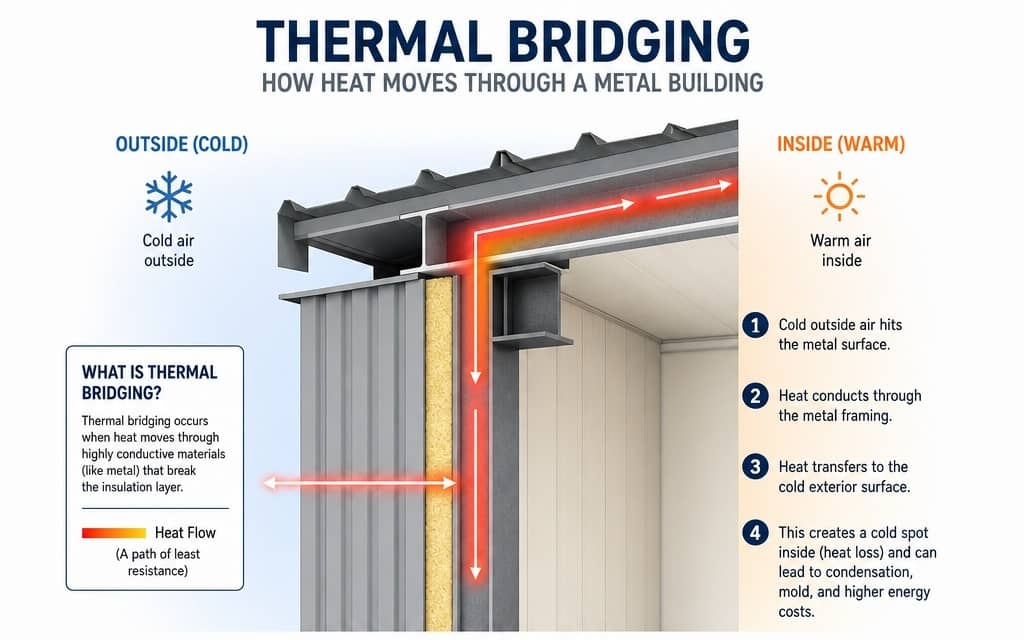
Thermal bridging in metal buildings occurs when highly conductive materials create pathways for heat to bypass the insulation. It most often appears at connection points (such as where steel framing meets insulated assemblies) and can lead to noticeable energy loss, higher operating costs, and uneven indoor temperatures. Recognizing how these pathways form helps architects and engineers design more efficient “building envelopes”. Understanding these issues, helps to apply strategies that reduce thermal bridging and improve overall energy performance in metal structures. In this article we’ll look at the reason for thermal bringing in metal buildings, and explore some solutions to the common problem.
Key Takeaways
- Thermal bridging occurs when high conductivity materials create pathways for heat transfer, impacting energy efficiency in metal buildings.
- Common examples include steel columns, beams, and junctions where metal panels meet, facilitating heat loss.
- It leads to increased energy consumption for heating and cooling, raising operational costs.
- Effective mitigation strategies include using thermal breaks and insulated metal panels to disrupt heat flow.
- Proper detailing and continuous insulation are essential for maintaining thermal integrity in metal structures.
Understanding Thermal Bridging: Definition and Importance
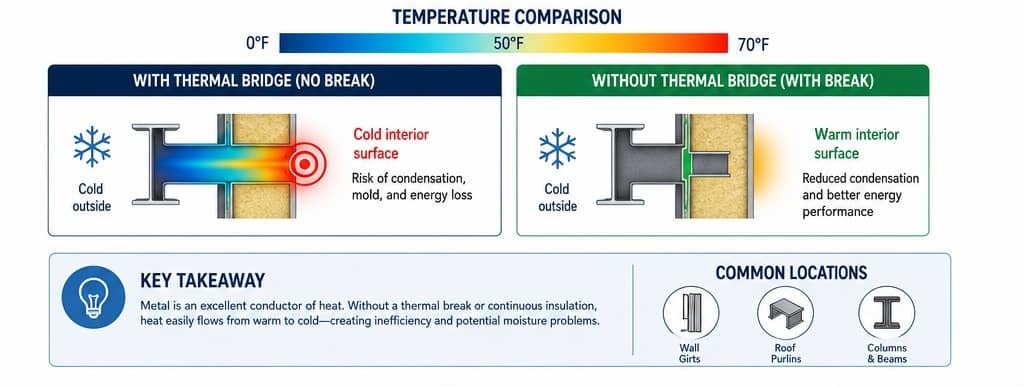
Thermal bridging occurs when a highly conductive material creates a direct path for heat to move through areas that should be insulated. In metal buildings, this often happens at connection points, such as where steel framing meets insulation. These bridges can cause unwanted heat loss or gain, reducing overall building performance. Understanding how thermal bridging works helps architects and engineers make better design and material choices. Identifying these areas early in the design process allows for effective heat loss or incursion mitigation strategies that improve thermal performance. Addressing thermal bridging not only enhances comfort but also supports long‑term energy efficiency and sustainability in metal building construction.
Effects of Thermal Bridging on Energy Efficiency
When heat moves through steel components instead of insulation, HVAC systems must work harder to maintain stable indoor temperatures. This increases energy consumption, operating costs, and the likelihood of condensation or cold spots. Over time, these inefficiencies can lower a building’s energy rating and compromise sustainability goals.
Addressing thermal bridging during design and construction ensures compliance with energy codes and helps maintain consistent comfort throughout the building.
Common Examples of Thermal Bridging in Metal Buildings
Several structural elements in metal buildings naturally create conductive paths for heat transfer:
- Steel beams and columns connecting interior and exterior surfaces
- Panel joints and roof‑to‑wall intersections where insulation continuity breaks
- Metal window and door frames without thermal breaks
- Penetrations for conduits or plumbing that interrupt insulation layers
How to Mitigate Thermal Bridging Effectively
Reducing thermal bridging requires thoughtful detailing and material selection:
- Thermal breaks: low‑conductivity materials placed between metal components
- Insulated metal panels (IMPs): combining structure and insulation in one system
- Continuous insulation: maintaining a uniform thermal barrier across framing
- Energy modeling: detecting potential bridging during design
- Quality inspections: ensuring proper installation of insulation and thermal breaks
Together, these strategies help maintain consistent temperatures and reduce long‑term energy costs.
How Insulation Helps Combat Thermal Bridging
Insulation is the most effective defense against thermal bridging. High‑performance materials with low thermal conductivity disrupt heat flow through steel and other conductive elements. Continuous insulation systems cover vulnerable junctions, preventing cold spots and condensation. Proper installation ensures a stable indoor climate and supports energy‑efficient operation throughout the building’s lifespan.
Emerging Solutions for Thermal Bridging
New technologies are reshaping how builders address thermal bridging in metal buildings:
- Polymer‑based thermal breaks that interrupt conductive paths
- Reflective barriers to reduce radiant heat transfer
- Next‑generation insulated metal panels with improved R‑values and airtightness
These innovations enhance thermal performance, reduce energy use, and align with modern sustainability standards.
Conclusion
For anyone exploring metal building options, understanding thermal bridging in metal buildings is an critical part of choosing a structure that performs well year‑round. Thermal bridging affects how efficiently a building holds heat or keeps it out, how comfortable it feels inside, and how much you’ll spend on heating and cooling over time. When you know where these heat‑loss points occur and what solutions exist, it becomes much easier to compare building systems, insulation packages, and overall value. By choosing a building designed to limit thermal bridging from the start, you’re investing in better comfort, lower energy bills, and a structure built to last.
Thermal Bridging FAQ
How Does Thermal Bridging Affect Indoor Comfort Levels?
Thermal bridging considerably impacts indoor comfort levels by creating temperature fluctuations. It allows heat transfer through materials, leading to cold spots or excessive heat, which can cause discomfort and increase energy consumption for heating or cooling.
Can Thermal Bridging Lead to Mold Growth?
Thermal bridging can indeed lead to mold growth. The temperature differentials created by thermal bridges may facilitate condensation, providing moisture that fosters mold proliferation, ultimately compromising indoor air quality and structural integrity in metal buildings.
What Materials Are Most Prone to Thermal Bridging?
Steel, concrete, and aluminum are materials most prone to thermal bridging due to their high thermal conductivity. These materials can create pathways for heat transfer, compromising energy efficiency and increasing the risk of condensation and mold growth.
How Often Should Thermal Bridging Assessments Be Conducted?
Thermal bridging assessments should be conducted regularly, ideally during initial design, construction, and periodically throughout the building’s lifespan. This guarantees ongoing evaluation of thermal performance and identifies potential issues arising from changes in building conditions.
Are There Building Codes Addressing Thermal Bridging?
Building codes often address thermal bridging through requirements for insulation and energy efficiency. These regulations aim to minimize energy loss and guarantee peak performance, promoting better building practices in both residential and commercial construction environments.
FREE ESTIMATES
If you want a metal building that’s engineered for real‑world performance, not just basic code compliance, ROI Metal Buildings can help. We design structures that minimize thermal bridging, improve energy efficiency, and deliver long‑term durability.