Which Metal Building Roof System Is Best for You, PBR Roof Panel vs Standing Seam?
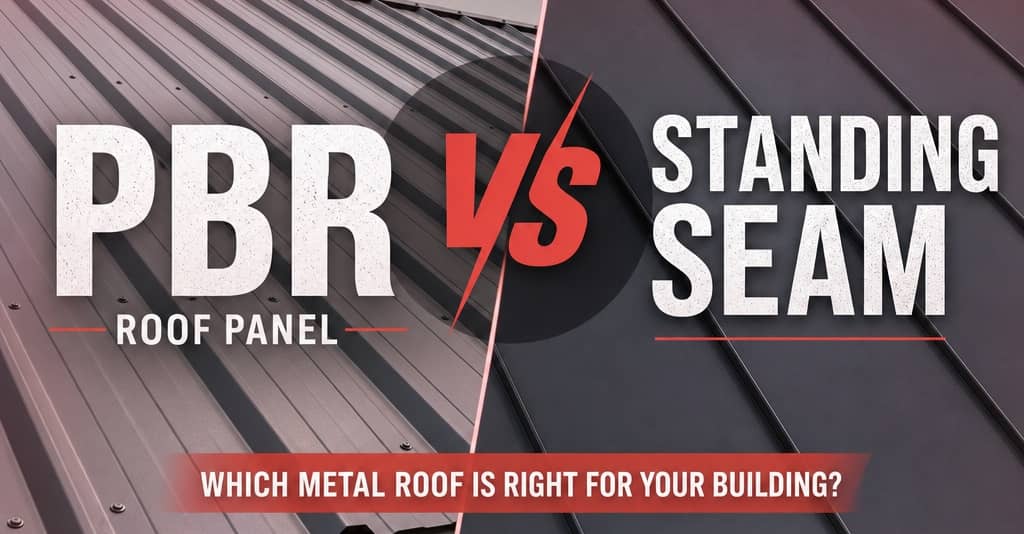
Metal building buyers almost always reach the same crossroads: deciding between PBR Roof Panel vs Standing Seam systems. Both are proven, both are widely used in pre‑engineered metal buildings, and both can perform exceptionally well when engineered correctly. But they are far from interchangeable. Their differences shape long‑term durability, leak resistance, maintenance demands, and total cost of ownership.
This guide breaks down how each roof system works, where each one excels, and how to choose the right option for your project—whether you’re building a shop, barndominium, warehouse, or aircraft hangar. It’s a clear, practical comparison to help you make the right call for your metal building.
Roof Systems Quick Facts
Materials and Panel Profiles
Standing seam panels are typically thicker (22-24 gauge) and available with premium coatings like PVDF for maximum fade and corrosion resistance. Their tall seams (1.5″ to 2″ or more) create a tight, water‑shedding joint. In addition to their robust construction and superior coatings, standing seam panels offer exceptional design versatility, making them a popular choice for both residential and commercial applications. The sleek, modern aesthetic of the panels enhances the overall architectural appeal of a building, allowing for a variety of color options and finishes to match any style.
PBR roof panels are usually thinner (26–29 gauge) and use a simpler ribbed profile. They’re economical, widely available, and easy to install, but they don’t offer the same structural performance or longevity. In contrast to thicker panels, PBR roof panels are designed primarily for cost-effectiveness and ease of installation, making them an attractive option for various building projects, especially in agricultural and light commercial applications. Their lightweight design allows for quicker handling and installation, reducing labor costs and project timelines.
Water Tightness and Leak Prevention
- Fasteners are concealed and protected from weather.
- Seams are mechanically locked or snap‑locked.
- No penetrations through the panel surface.
Thermal Movement
Standing seam systems use floating clips that allow the panel to slide. This prevents:
- Oil canning
- Fastener back‑out
- Panel distortion
- Premature wear
Wind Uplift and Structural Performance
Standing seam systems consistently achieve higher wind ratings because the continuous vertical seams and floating clip connections distribute uplift forces across the entire roof diaphragm. Instead of relying on individual fasteners to resist wind, the system works as a unified, interlocking surface. That’s why standing seam performance is the preferred choice in environments where wind velocity changes rapidly or violently.
They’re ideal for:
Coastal regions: where hurricanes, salt‑laden air, and sustained winds demand maximum uplift resistance.
Tornado‑prone states: where sudden pressure drops can rip fastened panels from the structure.
High‑elevation sites: where mountain gusts create extreme uplift and directional wind shear.
PBR roof panels can perform well in high‑wind zones too, but only when engineered with heavier gauges, closer fastener spacing, and reinforced purlin support. In other words, the panel isn’t the limiting factor, the engineering is. With PBR, uplift resistance depends heavily on the quantity, spacing, and quality of exposed fasteners, which means performance varies more from project to project.
Standing seam delivers inherently higher wind performance by design. PBR can match it in some cases, but only when the engineering is dialed in with precision.
Durability and Life Expectancy
Standing seam roofs routinely last 30 – 40+ years with minimal maintenance.
PBR screw‑down roof panels typically last 15 – 25 years, depending on climate, coating, and upkeep. The exposed fasteners are the limiting factor.
If you want a metal building roof system you install once and forget, standing seam is the clear choice.
Maintenance and Repair
Standing seam roofs require very little routine maintenance because the system is built around concealed clips, continuous seams, and no exposed fasteners. There are no screws backing out over time, no washers degrading in the sun, and no penetrations that need periodic resealing. If damage ever occurs, individual panels can be replaced without disturbing the rest of the roof, which makes standing seam upkeep both predictable and low‑cost over the building’s lifespan.
PBR, by contrast, rely on hundreds (sometimes thousands) of exposed fasteners. Each one is a potential maintenance point. That’s why maintenance typically includes:
Regular screw tightening – fasteners loosen as panels expand and contract.
Washer replacement – neoprene washers dry out, crack, or compress over time.
Corrosion inspections – exposed fastener heads can rust, especially where moisture or debris collects.
In harsh climates, such as coastal, industrial, or high‑UV regions, this maintenance becomes more frequent. Salt, chemical exposure, and intense sun accelerate washer breakdown and fastener corrosion, making PBR roofs more hands‑on over time.
Standing seam minimizes these vulnerabilities by design. PBR can still be a reliable system, but owners should expect a more active maintenance schedule, especially in demanding environments.
PBR Roof Panel vs Standing Seam: Cost and Installation Speed
This is where PBR truly shines. When the conversation shifts from performance to upfront cost and installation efficiency, the difference between PBR Roof Panel vs Standing Seam becomes clear.
Standing seam systems come with:
Higher material cost: thicker panels, clips, and specialized trims increase the price per square foot.
Higher labor cost: crews need more time to stage clips, align seams, and mechanically seam long runs.
Specialized equipment: seaming machines, longer lifts, and trained installers are required for proper installation.
PBR systems, on the other hand, offer:
Lower upfront cost: panels, fasteners, and trims are simpler and less expensive.
Faster installation: crews can cover large areas quickly with exposed fasteners and wider panel coverage.
General‑crew friendly installation: no seaming machines, no specialty training, and fewer steps.
If budget is the primary driver, PBR is the economical choice. It delivers a strong, reliable roof at a lower cost and with a faster schedule, especially valuable for shops, warehouses, and agricultural buildings where cost efficiency matters more than premium performance.
Standing seam still wins on long‑term value, but PBR wins the day when the goal is affordability and speed.
Aesthetics and Architectural Appeal
Standing seam roofs deliver a clean, modern, high‑end appearance thanks to their tall vertical ribs and uninterrupted lines. This architectural look is a major reason standing seam aesthetics dominate barndominiums, retail storefronts, and residential projects. The panels create a sleek profile that reads “premium” from the street, and the concealed‑fastener design keeps the roof visually smooth for decades.
PBR roof panels, by comparison, have a more utilitarian, functional appearance. They look durable and practical, but not refined. For many buyers, that’s exactly what they want. For others, especially in residential or customer‑facing settings, the look may feel too basic.
In short: standing seam elevates the building’s visual appeal, while PBR keeps things simple, rugged, and budget‑friendly.
Acoustic and Thermal Performance
Standing seam systems, especially when paired with proper thermal insulation and underlayment, offer far better control over air movement, moisture, noise, and heat transfer. The concealed‑fastener design creates a tighter building envelope, and the continuous seams reduce the number of potential leak paths. That’s why standing seam performance is often preferred in climates where comfort, energy efficiency, and interior protection matter.
They excel at controlling:
Air infiltration: fewer penetrations mean fewer drafts and more stable interior temperatures.
Water intrusion: raised seams and hidden clips keep water away from fasteners and panel laps.
Noise: insulation + underlayment dampen rain impact and reduce echo inside the building.
Thermal bridging: floating clips allow panels to expand without transferring as much heat or cold into the structure.
PBR roofs, by comparison, have more direct contact points between the panel and structure, plus hundreds of exposed fasteners. This makes them more prone to thermal “popping” as the metal expands and contracts throughout the day. They can also be noticeably noisier during rain, especially in buildings without insulation or with minimal interior finishes. That’s why PBR roof behavior varies more depending on how the building is insulated and how often the fasteners are maintained.
In short: standing seam provides a quieter, tighter, more controlled interior environment, while PBR is functional but less refined in terms of comfort and acoustics.
Bottom Lines: When to Choose PBR Roof Panel vs Standing Seam?
When to Choose Standing Seam
When to Choose PBR Roof Panels
- Maximum leak protection
- Longest lifespan
- Minimal maintenance
- High wind performance
- A modern architectural look
- Better performance on low‑slope roofs
- Budget is the top priority
- You need fast installation
- The building is agricultural or industrial
- You’re comfortable with periodic maintenance
- A utilitarian look is acceptable
Final Takeaways
Request Your FREE Estimate Today
Need real numbers for your roof system or full building package? Get a free, no‑obligation estimate today.