You open the mailbox, pull out the electric bill, and feel that familiar sting. Whether it is the dead of winter or the peak of summer, keeping a steel garage comfortable can quietly drain your budget month after month. Steel garages are durable, low-maintenance, and built to last, but without the right upgrades they also conduct heat and cold with surprising speed. The good news is that a handful of practical energy saving tips for steel garages can turn that temperature-swinging metal shell into a stable, efficient space. This guide covers seven targeted solutions that lower utility bills, improve comfort, and reduce your environmental footprint, whether your garage is attached to your home or standing on its own.
Steel conducts heat and cold far more rapidly than wood, which means an uninsulated metal garage can feel like an oven in July and a freezer in January. If your garage is climate-controlled or connected to your home, those temperature swings force your HVAC system to work harder than it should. That extra strain shows up directly on your energy bill. Reducing that waste lowers carbon emissions and shrinks your household’s environmental footprint, a priority more homeowners are taking seriously in 2026. Metal buildings now account for 65% of all commercial construction in the United States, yet residential steel garages often lag behind in insulation standards. One statistic worth remembering: approximately 25% of heat loss occurs through the roof, which makes ceiling and roof treatments the highest-priority upgrades on this list.
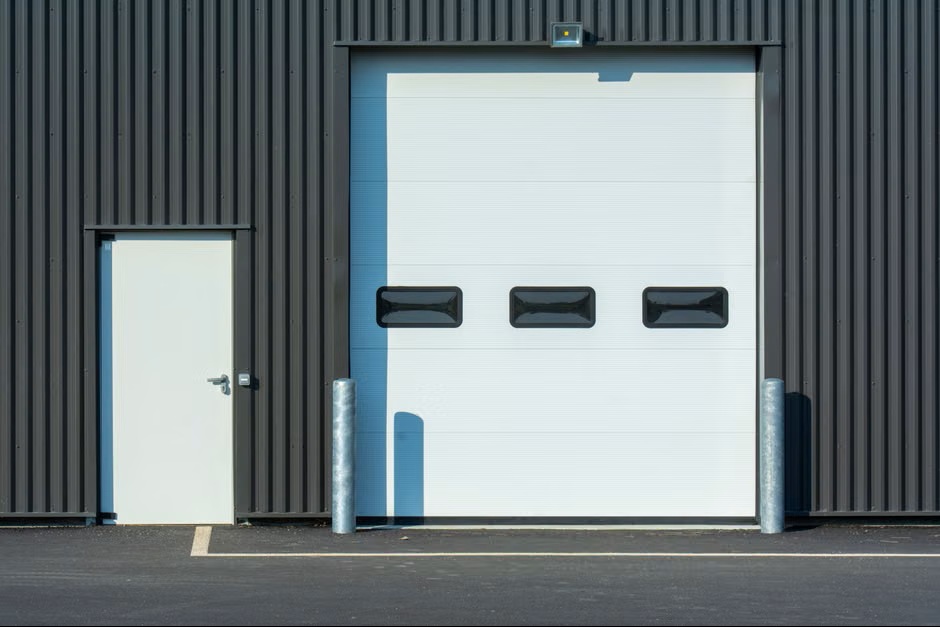
Even the best insulation underperforms when air leaks through gaps around doors, windows, and floor joints. Threshold and bottom seals are the first line of defense. Replace worn-out rubber or vinyl weather stripping on overhead doors to stop draft infiltration at the floor line, the most common leak point in any garage. Double-pane windows with low-E glass block heat exchange while still letting in natural light, a worthwhile upgrade over single-pane glass. For walk-in doors, thermal breaks in the form of insulated frames reduce direct conductive losses through metal-to-metal contact. Caulking gaps between wall panels, floor joints, and window frames with silicone or latex caulk closes the smaller openings that add up over time. A quick test: on a sunny day, close all doors and windows, then look for visible light gaps. Any light passing through is an air leak that needs sealing.
Lighting might seem like a minor factor, but the savings add up quickly in a garage that sees regular use. Energy Star-rated LEDs use at least 75% less energy and last 25 times longer than conventional incandescent bulbs. They also produce virtually zero extra heat, which reduces the cooling load on your garage in summer months. Motion sensors or timers ensure lights are only on when the space is occupied, eliminating wasted energy from forgotten lights. When planning your layout, choose LED fixtures with appropriate lumens for task areas like workbenches and parking zones rather than over-lighting the entire space. A typical garage LED retrofit pays for itself in energy savings within 6 to 12 months, depending on how often the lights are used.
Weatherstripping is not a set-it-and-forget-it upgrade. Seasonal temperature changes cause materials to expand, contract, and crack, so inspect garage door weatherstripping and interior door seals at least twice per year. Replace worn rubber, vinyl, or foam seals promptly, since even small gaps can compromise the efficiency of your insulation. The bottom edge of overhead garage doors deserves special attention, as it is the most common leak point. If the bottom weather seal shows signs of cracking or flattening, replace it. Also check that garage doors close flush against the frame, because misaligned tracks can create gaps that defeat even the best weatherstripping. Most replacements require only basic tools and under an hour of work, making this one of the most accessible DIY upgrades available.
The seven solutions covered here, insulation, air sealing, reflective roofing, ventilation, LED lighting, weatherstripping maintenance, and garage door insulation, work together to deliver year-round comfort, lower utility bills, and a reduced environmental footprint. Start with the highest-impact, lowest-cost fixes like weatherstripping, LED bulbs, and caulking, then work toward larger investments such as spray foam or door replacement. Each upgrade builds on the last, and the savings compound over time. If you have tried any of these energy saving tips for steel garages, share your results or ask questions in the comments. For a personalized plan, a professional energy audit is the fastest way to pinpoint where your garage is losing energy and what to tackle first.