Why Your Slab Cracks and How to Avoid It
Concrete looks solid and permanent, but at the material level it is constantly moving, shrinking, expanding, and responding to loads. When that movement is restrained or the slab is underdesigned, it cracks. Some cracking is normal and acceptable. Other cracking points to problems with design, subgrade, reinforcement, or construction that can shorten the life of a metal building and damage what is inside it.
For a metal building buyer, understanding cracks in foundation slab is not just academic. Your slab is the foundation for everything else. Getting it right protects your building, your equipment, and your long‑term ROI.
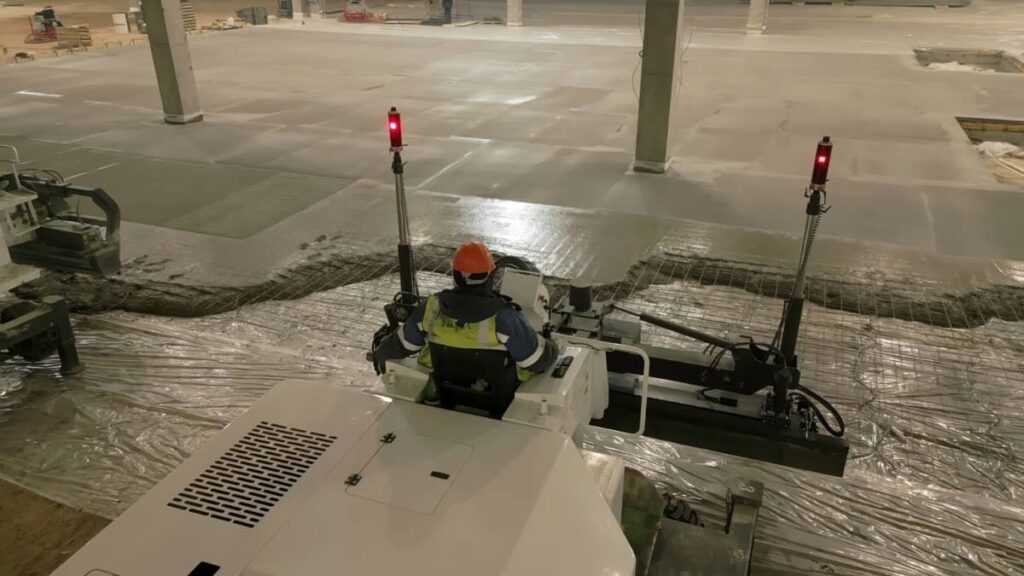
How concrete behaves and why that matters
Concrete is a brittle, composite material. It has high compressive strength but relatively low tensile strength, typically only about 8 to 15 percent of its compressive strength. When tensile stresses exceed that capacity, the slab cracks.
Two big categories drive most slab cracking:
- Volume change
- Applied loads
Volume change includes drying shrinkage, thermal contraction and expansion, and moisture‑related movement. Applied loads include vehicles, point loads from columns, racks, lifts, and impact.
A slab on grade is also restrained by:
- The subgrade and base
- Perimeter footings and walls
- Reinforcement
- Embedded items and penetrations
When concrete wants to move and something restrains it, tensile stresses build. If those stresses are not relieved at joints or by controlled cracking, they show up as random cracks.
Drying shrinkage and early‑age cracking
When concrete is placed, it usually contains more water than is needed to hydrate the cement. The extra water is there for workability. As that water leaves the slab during curing and drying, the concrete shrinks.
Typical ultimate drying shrinkage for conventional concrete can range from about 0.04 to 0.08 percent (400 to 800 microstrain), depending on mix design, aggregate, and curing. That sounds small, but over a 100‑foot slab, 0.06 percent shrinkage represents more than 3/4 inch of total movement. If that movement is restrained, the slab will crack.
Key factors that increase drying shrinkage:
- High water‑cement ratio
- Fine aggregate with high shrinkage characteristics
- Thin sections that dry quickly
- Poor curing that allows rapid moisture loss
Early‑age shrinkage cracking (a common source of cracks in foundation slab) often appears within the first days or weeks.
It may show up as:
- Random, map‑like hairline cracks
- Cracks that roughly follow reentrant corners or penetrations
- Cracks that appear between widely spaced joints
Industry guidance, including ACI 302 and ACI 224, emphasizes that even with good design and construction, some shrinkage cracking is expected and does not necessarily indicate failure. ASCC American Concrete Institute The goal is not a crack‑free slab. The goal is a slab where cracks are controlled, located where you expect them, and kept tight enough that they do not affect performance.
Thermal movement and seasonal cracking
Concrete expands when it heats up and contracts when it cools. Daily temperature swings and seasonal changes can cause significant length changes in large slabs. If the slab is restrained at the perimeter or by interior elements, thermal contraction can create tensile stresses and cracking similar to drying shrinkage.
Thermal movement is especially important for:
- Large, unbroken slab areas
- Exterior slabs exposed to sun and cold
- Slabs tied rigidly to walls or foundations without isolation joints
Without proper expansion and isolation joints, thermal movement often shows up as:
- Cracks at door openings
- Cracks near corners and reentrant angles
- Cracks parallel to long, continuous edges
ACI guidance recognizes thermal contraction as a primary driver of random cracking in slabs on ground and recommends jointing patterns and isolation details to accommodate it.
Subgrade and base issues
A slab is only as good as the support beneath it, and poor subgrade prep is a leading cause of cracks in foundation slab.
Typical subgrade problems include:
- Inadequate compaction – Loose or poorly compacted fill settles over time, leaving parts of the slab unsupported. The slab then bends under its own weight or under loads and cracks.
- Variable soil conditions – Soft spots, organic material, or pockets of topsoil create differential support. One part of the slab moves more than another, which introduces bending and tension.
- Expansive clays – In some regions, clay soils swell when wet and shrink when dry. That movement can lift or drop sections of slab, causing cracking and curling.
- Poor drainage – Water trapped under or around the slab weakens the subgrade and can lead to pumping, erosion, and settlement.
ACI 360, Guide to Design of Slabs‑on‑Ground, stresses the importance of uniform, well‑compacted support and proper drainage to minimize cracking and differential movement.
For a metal building, subgrade issues often show up as:
- Wide cracks with vertical displacement (one side higher than the other)
- Cracks that follow areas of known fill or utility trenches
- Slab “rocking” under forklifts or vehicles
- Low spots that collect water
Slab thickness, loads, and reinforcement
Metal buildings often carry concentrated loads from:
- Columns and frames
- Vehicle traffic and forklifts
- Storage racks and point loads
- Vehicle lifts and equipment pads
If the slab is too thin or under‑reinforced for these loads, it can lead to serious cracks in foundation slab and long-term structural issues.
Key technical points:
- Thickness – Slab thickness is the primary driver of flexural capacity. A small increase in thickness can significantly increase load capacity. ACI 360 provides design methods for unreinforced and reinforced slabs on ground based on loads, subgrade modulus, and allowable stresses.
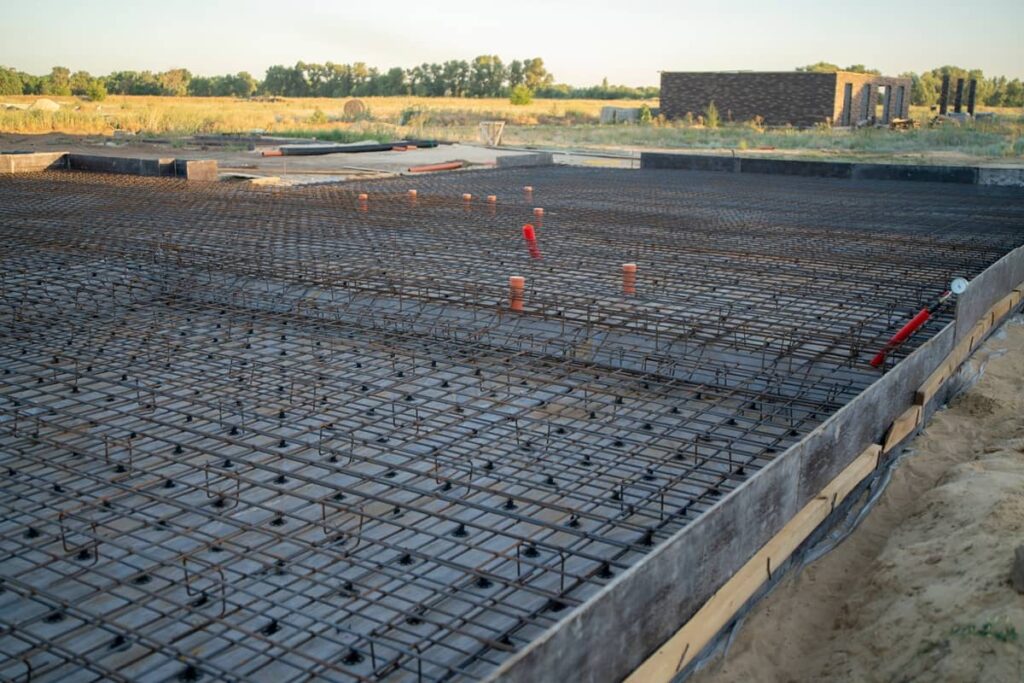
- Reinforcement – Conventional reinforcement (rebar or welded wire reinforcement) in slabs on ground is typically used to control crack width, not to prevent cracking entirely. Proper placement is critical. If reinforcement is left on the subgrade instead of being supported in the slab depth, it does little to hold cracks tight.
- Load transfer at joints – For slabs with significant traffic, dowels or load‑transfer devices at joints help prevent differential movement and edge spalling. Poor load transfer can lead to dominant joints that open wider than expected and cause cracking elsewhere.
Under‑designed slabs often show:
- Wide cracks that run between columns or across high‑load paths
- Cracks that open and close as loads move across them
- Spalling and chipping at joints and edges
Joint design and dominant cracks
Joints are not just lines in the concrete. They are engineered locations where the slab is allowed to crack and move in a controlled way.
There are three main joint types in slabs on ground:
- Contraction (control) joints – These are sawed or tooled joints that create a weakened plane so the slab cracks there as it shrinks.
- Construction joints – These occur where one day’s pour stops and another begins. They can be detailed to act as contraction joints.
- Isolation (expansion) joints – These separate the slab from columns, walls, and other fixed elements so the slab can move without restraint.
ACI 302 and ACI 360 recommend that contraction joints be spaced so that the panel length‑to‑width ratio does not exceed about 1.5 to 1, and that joint spacing in feet generally not exceed 2 to 3 times the slab thickness in inches.
For example, a 5‑inch slab might have joints at 10 to 15 feet.
If joints are spaced too far apart, cut too late, or not deep enough (they should be at least one‑quarter of slab thickness), the slab will often crack randomly between joints, contributing to uncontrolled cracks in foundation slab that compromise performance.
Research and industry experience also highlight the concept of “dominant joints.” These are joints or cracks that open wider than others and attract more movement. When shrinkage energy is not fully relieved at joints, it can cause some joints to open excessively while others stay tight, or it can create random cracks away from joints.
Signs of joint design or execution problems:
- Random cracks that do not follow the joint layout
- Joints that are much wider than expected
- Edge spalling and chipping at heavily trafficked joints
- Cracks that start at reentrant corners where no joint was provided
When cracks are acceptable and when they are not
Industry documents like ACI 224 make it clear that some cracking is inevitable and acceptable. The key is understanding which cracks are cosmetic and which indicate a problem. American Concrete Institute
You can think about slab cracks in four broad categories:
- Hairline shrinkage cracks – Typically less than 1/32 inch wide, often random or map‑like. These are usually cosmetic and do not affect performance.
- Tight cracks along control joints – These indicate that joints are doing their job. As long as they remain tight and edges are not spalling, they are generally acceptable.
- Wider cracks (around 1/8 inch or more) – These may indicate higher shrinkage, inadequate jointing, or load‑related movement. They can allow water and debris into the slab and may need evaluation and sealing.
- Cracks with vertical displacement or radiating from columns – These are red flags. They often point to subgrade settlement, inadequate thickness, or reinforcement issues and should be evaluated by an engineer.
For a metal building owner, the practical questions are:
- Is the crack moving or getting worse over time?
- Is there a height difference across the crack?
- Is it affecting doors, equipment, or drainage?
- Is there spalling or chipping at joints and edges?
If the answer is yes to any of these, it is worth a closer look.
Practical steps to prevent slab cracking for metal buildings
If you are planning a metal building, you can dramatically reduce slab problems by focusing on a few key areas.
1. Get the subgrade right
- Remove organic material and topsoil
- Compact in lifts to specified density
- Use a well‑graded granular base where appropriate
- Address expansive soils with stabilization or over‑excavation
- Provide drainage so water does not sit under or around the slab
2. Design the slab for real loads
- Match thickness to use – Light storage might be fine at 4 inches, but shops, equipment, and vehicle traffic often justify 5 to 6 inches or more, with localized thickening at columns and heavy pads.
- Consider reinforcement strategy – Use rebar or welded wire reinforcement for crack control, and make sure it is supported so it stays in the middle third of the slab depth.
- Provide load transfer at joints – For slabs with forklifts or heavy traffic, use dowels or proprietary load‑transfer devices at key joints.
3. Use a low‑shrinkage mix and control water
- Specify a reasonable maximum water‑cement ratio
- Avoid adding water at the jobsite for workability
- Work with the ready‑mix supplier on aggregate and admixture selection
Technical bulletins from producers and ACI guidance both emphasize that controlling water content is one of the most effective ways to reduce shrinkage cracking.
4. Detail joints carefully and cut them on time
- Lay out joints so panels are as square as practical
- Keep length‑to‑width ratios near or below 1.5 to 1
- Limit joint spacing based on slab thickness
- Cut contraction joints as soon as the concrete can be sawed without raveling, often within 6 to 12 hours
- Provide isolation joints at columns, walls, and door openings
5. Cure properly
- Use curing compounds, wet curing, or blankets as appropriate
- Protect the slab from rapid drying in hot, windy conditions
- Protect from freezing in cold weather
- Maintain curing for several days, not just a few hours
Good curing not only reduces cracking but also improves surface durability and long‑term strength.
Closing thoughts
You cannot completely eliminate slab cracking, and any contractor who promises a crack‑free floor is ignoring what ACI and decades of field experience say. What you can do is understand the mechanisms behind cracks in foundation slab and make smart decisions that keep it controlled and harmless. Get those right, and most cracks that appear will be the kind you can live with, not the kind that keep you up at night.